Iran Set to Deepen Pressure on Iraqi Kurdistan After US Troop Withdrawal
The end of the US military mission in Iraq has left the Kurdistan Region exposed to mounting pressure from both Tehran and Baghdad. Analysts warn that internal Kurdish divisions pose as great a threat as external forces.
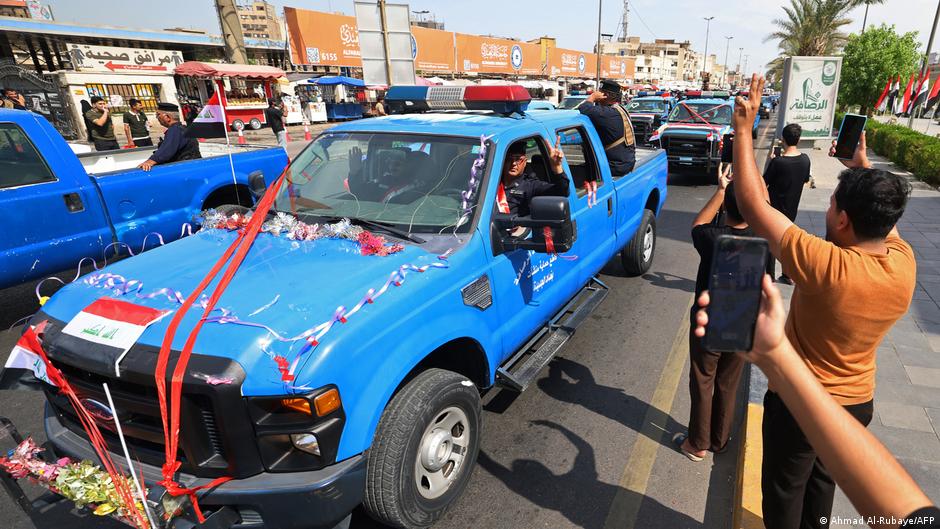
The conclusion of the US military mission in Iraq has been welcomed in Baghdad, where Prime Minister Ali al-Zaidi declared October 1 a "Day of Sovereignty and Independence," a sentiment echoed by Tehran, the Islamic Revolutionary Guard Corps and Iran-backed Shiite militias. In Erbil, capital of the Kurdistan Region of Iraq, the atmosphere is far more tense. After two decades relying on US protection, the region now faces growing pressure from Baghdad to centralize authority alongside escalating military threats from neighboring Iran.
A strategy of containment
Brussels-based Middle East analyst Hesam Dastpish says Iran is not planning a full invasion but rather a gradual erosion of Kurdish autonomy, aiming to reduce the region to a purely administrative body with no political maneuvering room — a goal reflected in repeated Iranian strikes targeting Iranian Kurdish opposition camps in the area. Salahuddin Khadiw, an analyst based in Mahabad, argues that Tehran does not seek to eliminate Kurdish autonomy entirely but prefers to keep it "controlled and weak," maintaining separate dealings with the rival power centers of Erbil and Sulaymaniyah to prevent a unified Kurdish authority from emerging.
Internal division as the core weakness
Analysts point to the long-standing rivalry between the Kurdistan Democratic Party and the Patriotic Union of Kurdistan, rooted in the 1990s civil war, as the region's most serious vulnerability. Hiwa Mahmoud Osman notes that Iran has spent decades exploiting this fragmentation, calling it the Kurds' biggest hurdle. Tehran-based researcher Ardeshir Pashang warns that unresolved political disputes among Kurdish leaders could ultimately lead to the collapse of the Kurdistan region as a political entity.
Opposition groups under pressure
Iranian Kurdish opposition groups sheltering in the KRI face mounting pressure to disarm and relocate, since their presence gives Iran a pretext for cross-border drone and missile strikes. Florida-based researcher Kasra Gharadaghi says these groups are now more exposed than ever, as Erbil's leverage has largely evaporated.
Washington's lingering financial leverage
Though US troops have left, Washington's influence persists through financial channels. Iraq's dependence on the US dollar gives the US Treasury indirect sway over Baghdad's affairs, including ensuring salaries reach KRI civil servants — a shift analysts describe as America moving from military balancer to economic observer.
