In occupied Ukraine, residents bury and burn everyday items to hide their identity from Russian forces
In Russian-occupied areas of Ukraine, people bury flags, books and school materials out of fear of arrest for showing Ukrainian identity, with occupied territories ranked among the least free in the world by Freedom House.
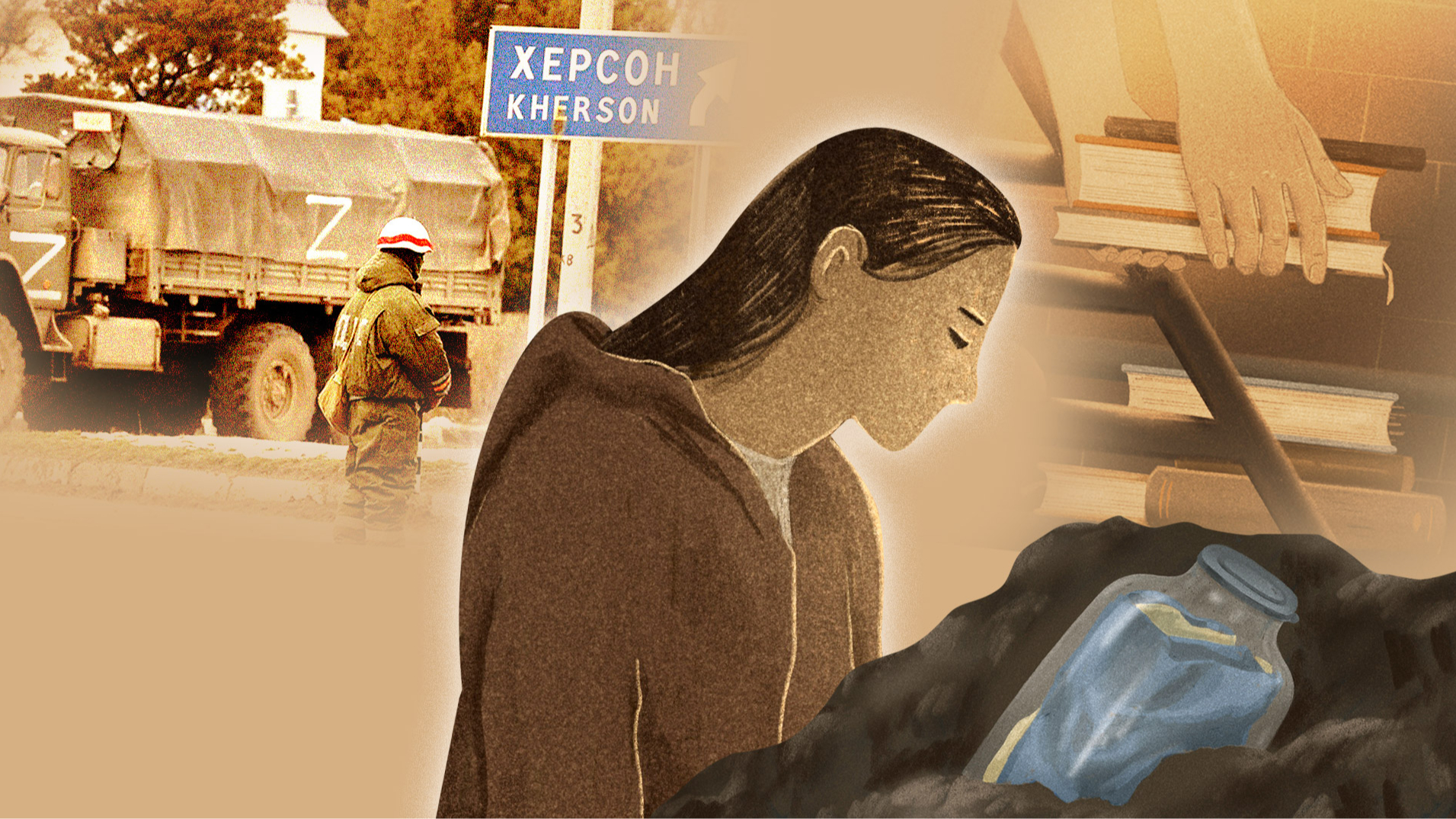
In Russian-occupied parts of Ukraine, ordinary objects such as a national flag, Ukrainian-language books or school textbooks have become life-threatening. Ukrainska Pravda has published testimonies from three teachers in occupied territories describing how they hid or destroyed anything linking them to Ukraine.
Svitlana, a school principal from Luhansk region, hid her school's flag under her clothing after occupation began, even though it already bore tire marks from military vehicles. A month later, Russian soldiers searched every house on her street, found her son's military uniform, beat her relatives and threw their belongings outside. The flag was later buried in a jar between the house and the cellar. The village now lies in a combat zone, and Svitlana is unsure whether the flag is still there.
Nataliya, a teacher of Ukrainian history from Kherson region, stopped speaking Ukrainian, changed her appearance and withdrew from social media to avoid drawing attention. She secretly continued teaching Ukrainian history online, repeatedly moving and reburying her history textbooks to avoid detection. After Russia blew up the Kakhovka dam, her village began flooding, and she rushed to save books and documents from the rising water.
Oleksandra, a Ukrainian language and literature teacher from Luhansk region who owned a home library of more than a thousand books, decided to burn dozens of Ukrainian volumes in a furnace at night after hearing that a neighboring teacher had been detained over similar literature. Children's Ukrainian flags and military-donated clothing burned along with the books. Over three months, Oleksandra was repeatedly interrogated and accused of treason, facing a possible 12-year sentence, and lost 13 kilograms during that period.
According to Freedom House's "Freedom in the World 2026" report, Russian-occupied areas of Ukraine scored just 1 out of 100, ranking them among the least free territories globally — below Syria, North Korea or Belarus. The UN Human Rights Monitoring Mission in Ukraine documented, from 2022 to 2024, a systematic imposition of Russian identity and suppression of Ukrainian identity in occupied areas, including violence against those who expressed it openly.