NATO's European Commander Lays Out Alliance "Theory of Victory" at Warsaw Forum
NATO's Supreme Allied Commander Europe, US General Alexus Grynkewich, publicly outlined the alliance's defence plan at the Warsaw Security Forum. Its aim is to stop an attack at the outset rather than defeat an adversary strategically.
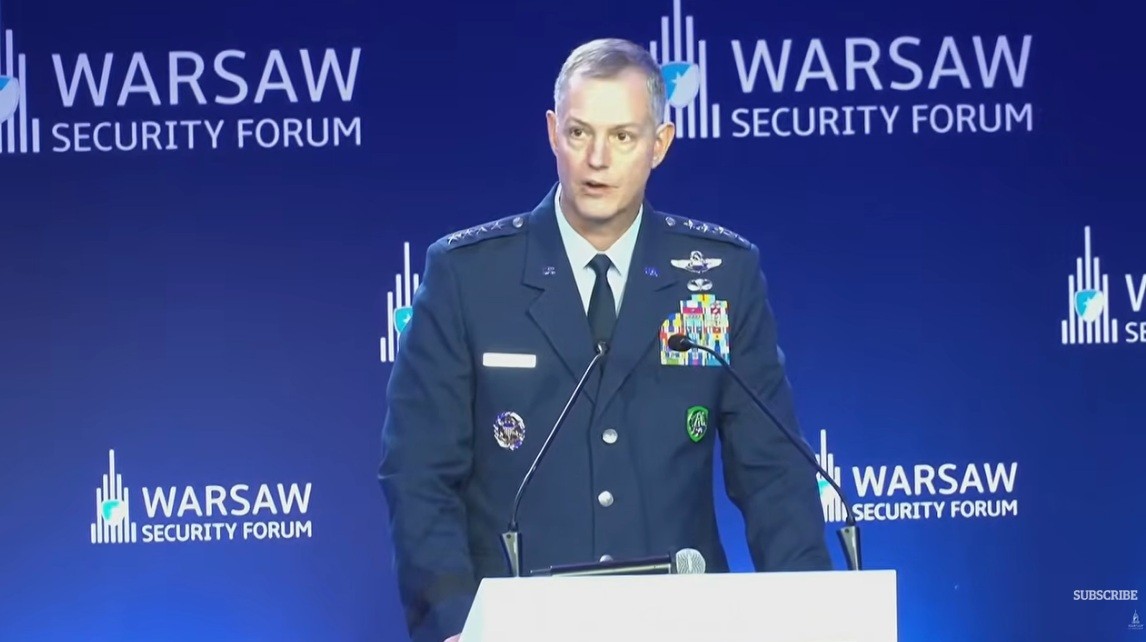
At the Warsaw Security Forum, the largest event of its kind in Eastern Europe, NATO's Supreme Allied Commander Europe, US General Alexus Grynkewich, spoke on 12 October 2026. He publicly described the alliance's "theory of victory", a concept for how NATO would act if any of its 32 member states were attacked. The topic matters because concern over war risks in Europe is growing, and there is regular debate over how NATO would respond to an adversary's actions.
What the theory involves
Grynkewich said the theory rests on the Euro-Atlantic deterrence and defence strategy, which all 32 members have agreed. He said intelligence data and modern algorithms should allow the alliance to spot an approaching attack in time and regroup its forces.
The plan calls for blocking an initial attack and preventing the enemy from advancing. Land forces would halt the assault, while air, naval, space and cyber forces would secure superiority in and above the combat zone. Strikes would also target those who support, supply or control the attacking forces.
No aim of strategic defeat
The general stressed that the alliance does not seek the strategic defeat of an opponent. The goal is a tactical and operational defeat of the forces deployed against NATO and denying them the chance to seize territory. For that reason, he said, the burden of escalation rests on the aggressor. The article's author sees in this an answer to fears that a flashpoint such as Narva could trigger a third world war.
Answers to questions
Grynkewich said the final version of the theory was completed about three months ago and was classified. He explained its release by the rising number of sabotage acts and provocations and by public anxiety.
Asked whether he worries that politicians might refuse to honour Article 5, the collective defence clause of the NATO treaty, he answered "No". He pointed to the Ankara declaration signed at the NATO summit, in which all 32 allies reaffirmed their commitment to Article 5. On US reliability, he pointed to American troops in Poland and along NATO's eastern flank.