French screen icon Marina Vlady, Vysotsky's muse, dies at 88
French actress Marina Vlady, best known to Soviet and Russian audiences as bard Vladimir Vysotsky's wife and muse, died on September 24 at age 88, leaving behind a film career of roughly 100 roles.
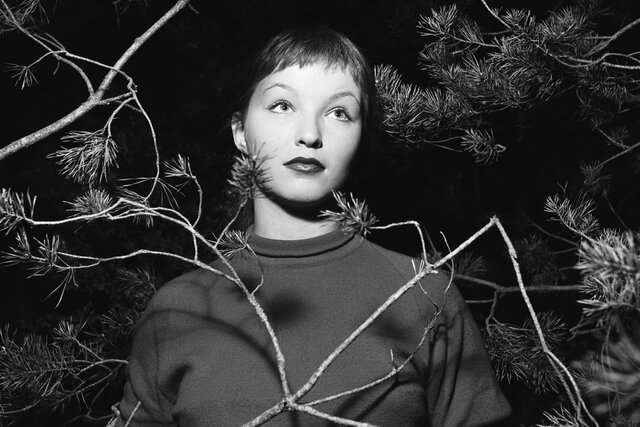
French actress Marina Vlady died on September 24 at the age of 88. Born near Paris into a White Russian émigré family, she was the daughter of opera singer Vladimir Polyakov-Baidarov, from whom she took her stage name, and ballerina Militsa Envald. She was the most famous of four sisters, all actresses, who once performed together in Chekhov's "Three Sisters."
Soviet audiences first encountered her as a mysterious witch in André Michel's melodrama "The Blonde Witch," and only later came to know her as the wife and muse of bard Vladimir Vysotsky. Their ten-year romance, which lasted until the poet's death in 1980, grew into a legend that in the Russian-speaking world often overshadowed Vlady's own considerable fame and talent.
After Vysotsky's death, many of his friends and heirs tried to distance Vlady from his legacy, particularly objecting to her memoir "Vladimir, or the Interrupted Flight" (1989), which they accused of inaccuracies and undue focus on the poet's addictions. Despite the criticism, the book became a bestseller in the Soviet Union during perestroika.
A career spanning genres
Vlady rose to fame in the 1950s in a trajectory often compared to Brigitte Bardot's. She appeared in films by directors including Jean Delannoy and Jean Cocteau, as well as several Italian productions alongside Marcello Mastroianni. In 1963 she won the Best Actress award at the Cannes Film Festival for "A Modern Story: The Queen Bee," a film about a woman who gradually dominates her husband that sparked controversy for challenging traditional morality.
In 1967, she starred in Jean-Luc Godard's "Two or Three Things I Know About Her," and later worked with directors such as Bertrand Tavernier, Márta Mészáros, and Ettore Scola. In Europe, she was frequently typecast as an embodiment of the "mysterious Russian soul," taking roles in adaptations of Russian literature such as Dostoevsky's "Crime and Punishment" and Chekhov's "The Steppe."
Across a career of roughly 100 film roles, Vlady remained, for Soviet and Russian audiences, above all the poet's muse.