Report: One Russian Firm Removed from New EU Sanctions Package at Estonia's Request
A Radio Free Europe journalist claims a Russian company supplying rare earth metals to Estonia's Silmet was dropped from the draft 22nd EU sanctions package at Estonia's request. ERR has not yet been able to verify the claim.
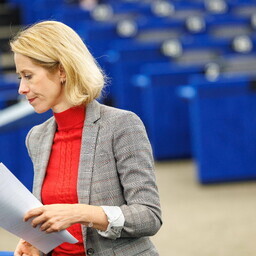
A Radio Free Europe journalist, Rikard Jozwiak, says a Russian company that supplies rare earth metals to the Estonian firm Silmet was removed from the draft of the European Union's 22nd sanctions package at Estonia's request. ERR has so far been unable to verify the claim.
The new package was agreed on Wednesday at the level of EU member state ambassadors. It covers 743 individuals and 826 companies linked to Russia's military-industrial complex. EU High Representative for Foreign Affairs and Security Policy Kaja Kallas said in August that it was the most extensive sanctions list in the bloc's history.
What was removed
According to Radio Free Europe, the list agreed on 7 October is shorter than the original version by one individual and one legal entity. The outlet said in its report that it had no information on which Russian firm was dropped. Jozwiak later wrote on social media that one company and one person were removed at Estonia's request.
He wrote that the company supplies rare earth metals to Silmet, where they are processed for use in products such as wind turbines in the European Union. The company is reportedly looking for alternative sources of supply.
What the sanctions involve
All companies in the new list appear on a register of Russian military-industrial enterprises compiled by the Russian government, and on that basis can receive state support. The individuals listed are the heads of these companies and thereby, in the EU's assessment, support Russia's military-industrial complex.
The sanctions agreed by the ambassadors have been sent for approval to the EU Council at foreign minister level. They are expected to take effect within the next few days.
The measures provide for freezing the assets of the sanctioned parties in the EU, banning them from entering or transiting through EU territory, and prohibiting the provision of funds and economic resources to the sanctioned companies.
The previous, 21st package of EU sanctions against Russia was adopted in July 2026. Among other aims, it was intended to reduce Russian revenue from oil exports.