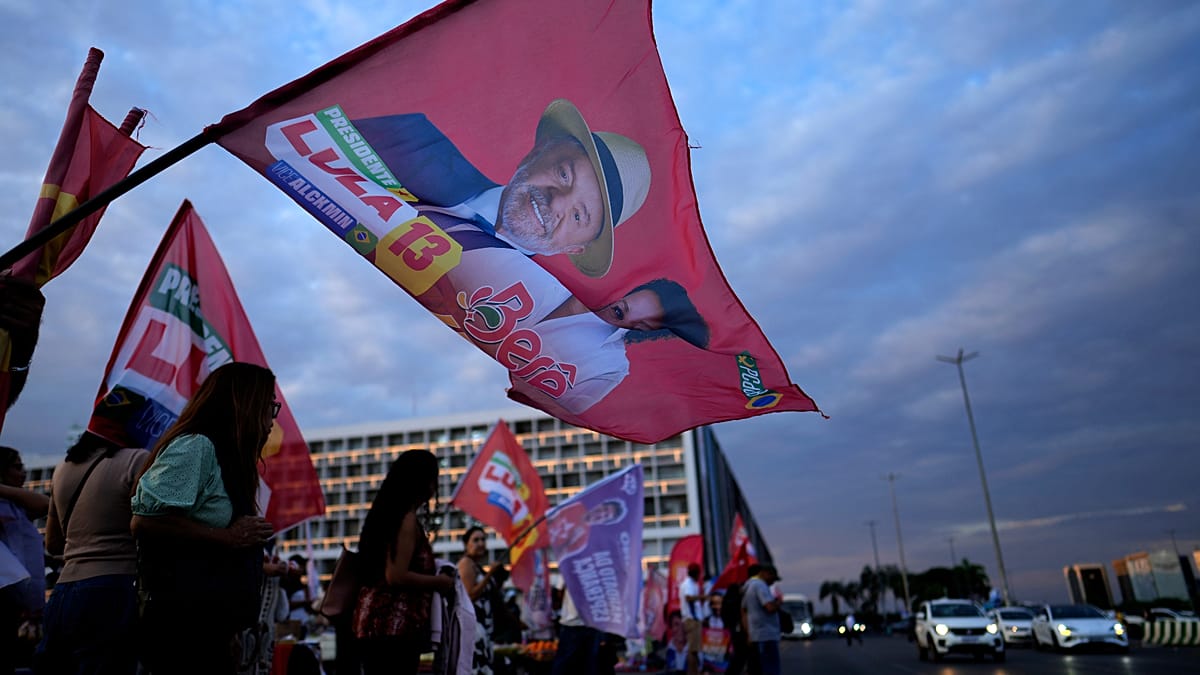
Lula tells supporters only he can stop 'fascism' before Brazil vote
Brazilian President Luiz Inácio Lula da Silva led a massive rally in Rio de Janeiro ahead of Sunday's election, claiming he alone stands between the country and a return to power by the Bolsonaro family. Polls show him with only a slim lead over rival Flávio Bolsonaro.
Brazilian President Luiz Inácio Lula da Silva led one of the largest leftwing demonstrations in Rio de Janeiro in years on Friday, a day before Sunday's crucial election, declaring himself the only obstacle to a far-right return to power.
The 80-year-old leader, seeking a historic fourth term, told the popular podcast Flow that without his opposition, "fascists" would easily reclaim the presidency. He framed the choice facing voters as one between himself or "barbarism".
A symbolic march
The rally began at Candelária church, where more than a million people, including Lula himself, gathered in 1984 to demand direct presidential elections. From there, supporters dressed in red marched toward Cinelândia, site of the 1968 "March of the Hundred Thousand" pro-democracy protest. Lula told the crowd the stakes were not one man's victory but the survival of democracy itself.
Rival and fears over his father
Lula's main challenger is 45-year-old Flávio Bolsonaro, whose father, former president Jair Bolsonaro, is serving a 27-year sentence for plotting a coup after losing the 2022 election. Many democratic advocates fear that if Flávio Bolsonaro wins, he would quickly move to free his father and weaken institutions such as the supreme court. Flávio Bolsonaro has pledged to pardon his father and appoint five staunchly conservative supreme court justices.
Polls show Lula with a narrow lead heading into the first round, though the race is widely expected to go to a runoff on 25 October. Lula nonetheless expressed hope of winning outright in the first round with more than 50% of the vote. Bolsonaro, in an online broadcast, insisted his campaign would prevail, calling the election "the end of the Workers' party era".