Migrant tunnels near Lithuania's border with Belarus point to Minsk's hand
Lithuanian border guards have uncovered 12 underground tunnels near the Belarusian border since the start of the year, used by migrants to enter illegally. Experts see the tunnels as a new phase of Belarus's hybrid pressure campaign.
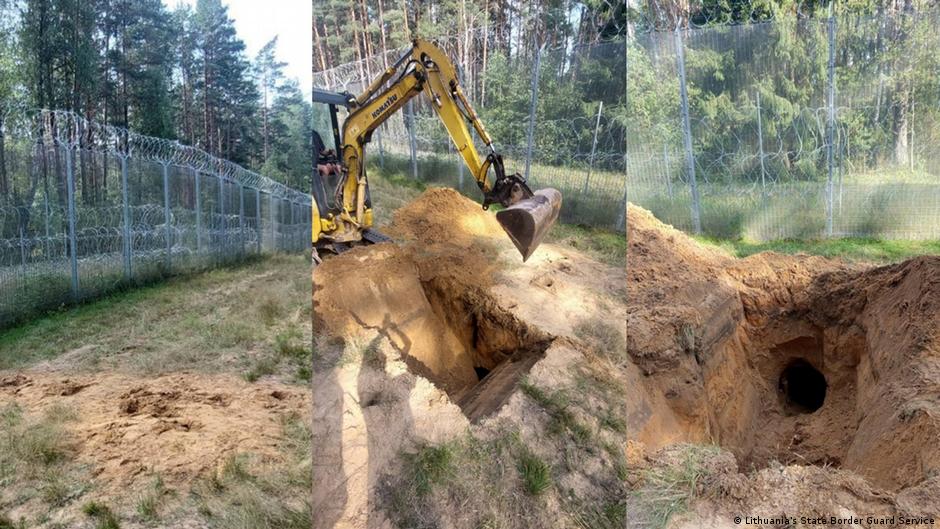
Lithuania's State Border Guard Service has discovered 12 underground tunnels near the border with Belarus since the beginning of the year, some stretching up to 25 meters on the Lithuanian side. Service commander General Rustamas Liubajevas said more such tunnels are expected to be found.
The roughly 700-kilometer border with Belarus is fenced along about 550 kilometers of its length. Liubajevas explained that a ground seismic system detects prolonged high-level vibrations underground, allowing guards to wait near a tunnel's exit and apprehend migrants as digging nears completion. Up to 40 migrants have been arrested emerging from such tunnels.
Lithuania's prosecutor's office confirmed a pre-trial investigation is underway against roughly 20 people suspected of illegally digging a tunnel, with possible additional charges of people smuggling. Because of the investigation, media are currently barred from visiting the sites.
Suspicion falls on Minsk
Liubajevas said the tunnels' sophistication suggests migrants are not acting alone, since building them requires materials such as wood to reinforce the walls — support he believes only Belarusian authorities could provide. He said Belarus appears to want to keep tension at the border high. Belarusian President Alexander Lukashenko has denied facilitating migration flows into neighboring states. Similar tunnels were previously found near Poland's border.
Margarita Seselgyte, director of the Institute of International Relations and Political Science at Vilnius University, said Belarus monitors its border closely and does not lie along the natural migration route from Afghanistan, Iran or Sri Lanka, meaning Minsk must have at least tolerated the digging. She described the tunnels as a hybrid attack meant to sow anxiety in society, aimed ultimately at weakening support for Ukraine and undermining European unity.
Linas Kojala, head of the Geopolitics and Security Studies Center, called the tunnels another phase of the weaponized-migration campaign underway since 2021, when Belarus drove large numbers of migrants toward Lithuania, Poland and Latvia. Lithuania recorded 1,652 attempted irregular border crossings last year. Experts note growing cooperation among Baltic states and Poland on border security, and Lithuania is currently testing Polish underground-scanning equipment to detect hidden cavities.