UK Accuses Iran Over Security Incident at RAF Fairford Airbase
The British government says Iran very probably coordinated a security incident near a UK/US airbase in southern England. The Iranian ambassador was summoned and two people were sanctioned.
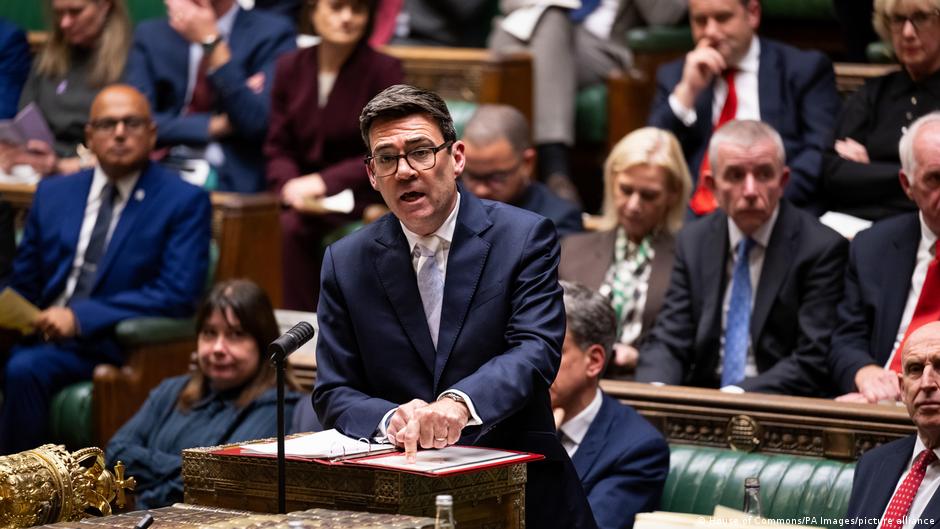
The British government has accused Iran of involvement in a security incident near RAF Fairford, an airbase in southern England used by British and US forces. Prime Minister Andy Burnham told the House of Commons on Monday that the incident was highly likely coordinated in Iran and almost certainly directed by Iran's Islamic Revolutionary Guard Corps (IRGC). Foreign Secretary Ed Miliband summoned Iran's ambassador and announced sanctions on two individuals.
What happened at the base
Five British nationals were arrested near the base on September 27 on suspicion of terrorism and explosives offenses. They were later released on bail under strict conditions, and another arrest followed days later. Police had already said a foreign state's involvement was possible, as the base matters to the US Air Force: it handles heavy bombers such as the B-1 and B-52, whose range is enough to reach Iran.
Preliminary reports say investigators found no viable explosives in the vans, though they did find accelerants such as petroleum. The competence of the group of young Britons from London, and the threat it posed, are not entirely clear and appear potentially limited. Even so, the incident caused a widespread alert and an international reaction. Afterwards the more advanced US B-1 bombers left the base, while the older, larger B-52 contingent stayed.
Sanctions and diplomatic response
Burnham said the UK may impose further sanctions and would target the criminal networks Iran uses, along with their funding. Miliband said the two individuals face an immediate asset freeze, a travel ban and director disqualification. They are Ruhollah Bazghandi, head of counterespionage operations in the IRGC, and Shahram Ali Reza Tamarzadeh Jakki, an alleged facilitator for the Zindashti criminal network.
Iran's ambassador, Ali Moussavi, categorically rejected the accusations, according to the state news agency IRNA, and asked London to present evidence.
Later, 29 countries, including the US, Britain, Australia, Canada, France, Germany, Spain and Ireland, issued a joint statement condemning Iran's violent attacks, including lethal plotting, arson, sabotage and cyber-attacks.