Russian-speaking Latvian voters face a fragmented field ahead of Saeima elections
Ahead of Latvia's October 3 parliamentary election, traditional "Russian" parties are polling below the 5% threshold, while Sovereign Power/Young Latvians and Latvia First compete to inherit the former Harmony electorate.
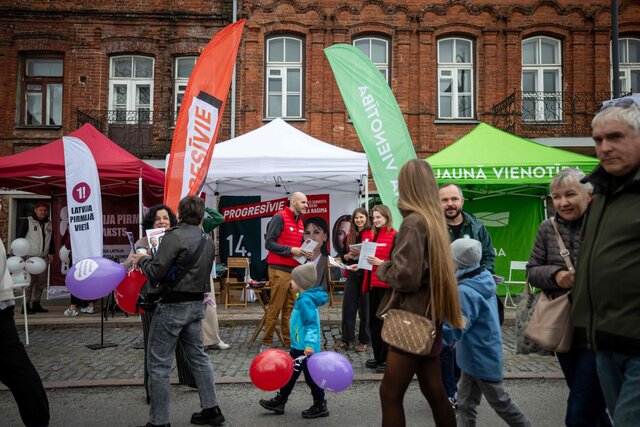
Latvia votes for its 15th Saeima on October 3, with polls suggesting seven political groups have a realistic chance of winning seats. Almost 35% of Latvian citizens speak Russian at home, yet the political representation built around that constituency has become more fragmented than ever.
Polls put both Harmony Center and For Stability! well below the 5% threshold, at roughly 3.1% and 2.4% respectively. For Stability! enters the election without a functioning parliamentary faction — it dissolved in February after membership fell to four lawmakers — and without its leader, Aleksejs Rosļikovs, who ended up in Belarus this spring after a Riga court ordered his arrest on charges of inciting ethnic hatred and placed him on a wanted list.
From Harmony's peak to collapse
In 2018, Harmony won the election outright with 19.8% of the vote and 23 seats, but in 2022 it failed to clear the 5% threshold for the first time. Its leadership's condemnation of Russia's full-scale invasion of Ukraine alienated Kremlin-aligned supporters and fractured the party internally.
Harmony's predecessor alliance, ZaPChEL, had finished a strong second with 25 seats in 2002, but ethnic Latvian parties refused to form a coalition with it over disputes about history and language policy. Even after winning outright in 2011, 2014, and 2018, Harmony was never invited into government — the party's defining paradox.
A turning point came when Harmony chairman Nils Ušakovs won Riga's mayoral race in 2009, delivering visible results such as free public transport for pensioners and schoolchildren and free school lunches. Corruption scandals and internal conflict later eroded that support, and Ušakovs was removed as mayor in 2019.
New rivals for the old electorate
Two groups are now actively courting former Harmony voters: Jūlija Stepaņenko's Sovereign Power, allied with Young Latvians, and Ainārs Šlesers' Latvia First. Stepaņenko defends the right to use Russian in services and business, while Šlesers supports keeping Russian as a school subject.
In the 2025 Riga City Council elections, Harmony again failed to clear the threshold, while Sovereign Power/Young Latvians won eight seats and Latvia First won 13 of 60. If the latest preelection polls hold, the two alliances could together win 33 parliamentary seats — just under a third of the Saeima.