Kurzeme defence forces conclude Namejs 2026 national defence exercise
The National Defence exercise Namejs 2026 wrapped up on September 20 in the area of the 4th Kurzeme Brigade of the National Guard, involving around 1,500 personnel. The drills tested both conventional defence readiness and response to hybrid threats.
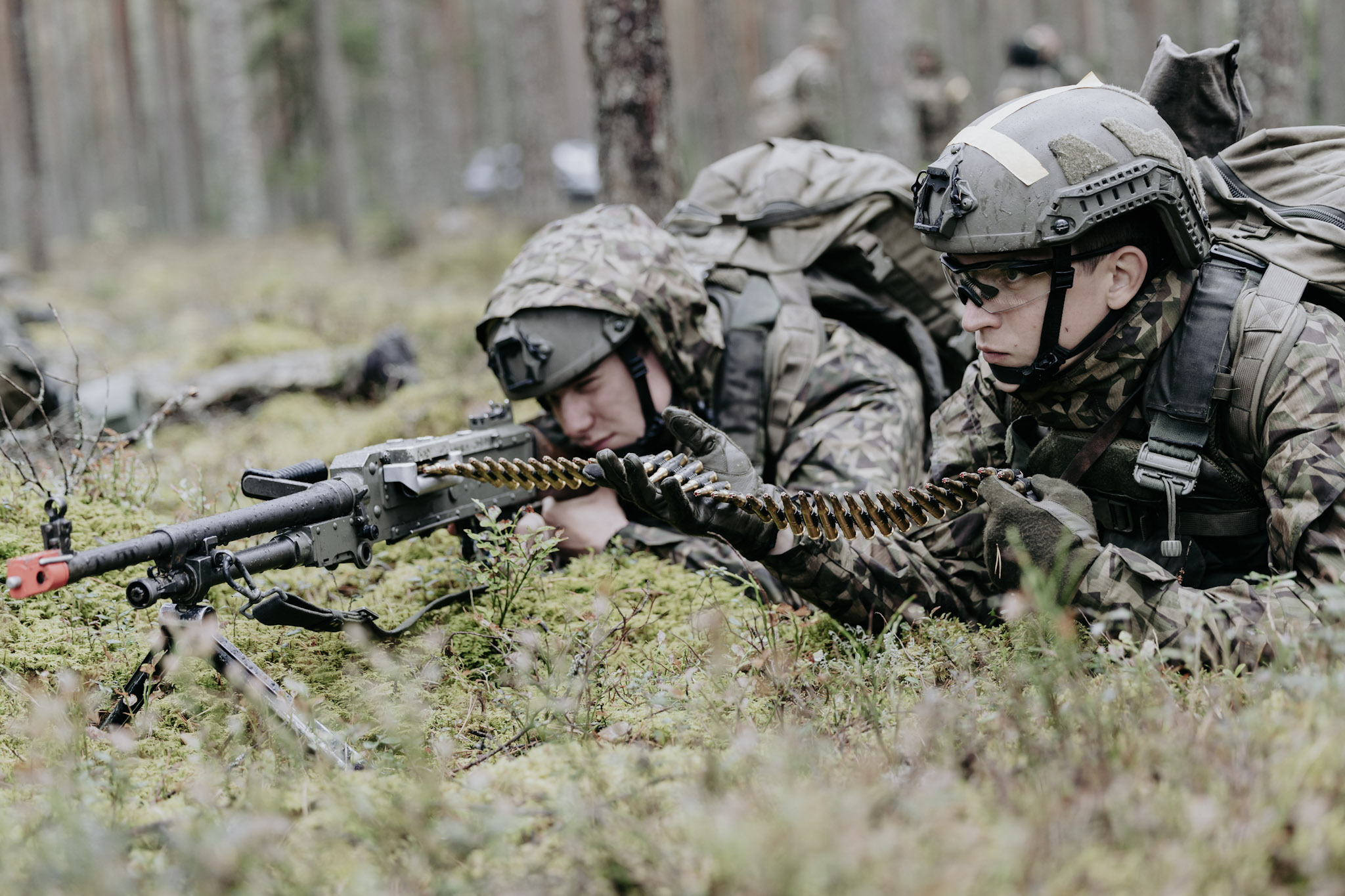
The comprehensive national defence exercise Namejs 2026, organized by Latvia's National Armed Forces, is running nationwide from September 2 to October 8, but concluded in the 4th Kurzeme Brigade's area on September 20. Around 1,500 National Guard members and soldiers took part across the Kurzeme and Zemgale regions, while nearly 100 reserve soldiers were called up to test mobilization readiness.
Brigade commander Lieutenant Colonel Ģirts Savins said this year's focus was on conventional defence tasks, including measuring how quickly a civilian can be turned into a fully equipped soldier. At the same time, response to hybrid threat scenarios was also assessed.
Hostage rescue and chemical incident scenario
At the former Liepāja metallurgical plant site, a complex scenario was staged involving a criminal group planning to blow up an industrial area and contaminate the environment. Soldiers, National Guard members, National Defence Service troops and police units took part, while the State Fire and Rescue Service and Emergency Medical Service responded on site, training to assist dozens of casualties simultaneously.
Savins acknowledged that future improvements are needed mainly in command coordination and communication networks linking the armed forces, Interior Ministry agencies, municipalities and police.
Participants' experience
Reserve soldier Jānis Vilks, a forester in civilian life, spent three days at this year's exercise and encourages others to join the reserve forces. National Guard member Valdis Kalns, who has one year of service, described tough conditions — sleepless nights, rain and insects — as valuable preparation, saying his motivation comes from wanting to be able to protect his family and country.
Young National Defence Service recruits also took part, forming platoons of about 50 soldiers within each battalion and working for the first time with various equipment, weapons and drones.