Russian court extends pretrial detention for ex-seminarians accused of plotting to kill 'Putin's confessor' Metropolitan Tikhon
A Moscow appeals court has rejected defense appeals to lift the extension of pretrial detention for Denis Popovich and Nikita Ivankovich, who are accused of plotting to assassinate Metropolitan Tikhon. The investigation has exceeded the legal 12-month limit, and the defense highlights serious inconsistencies in the case.
Charges and Detention Extension
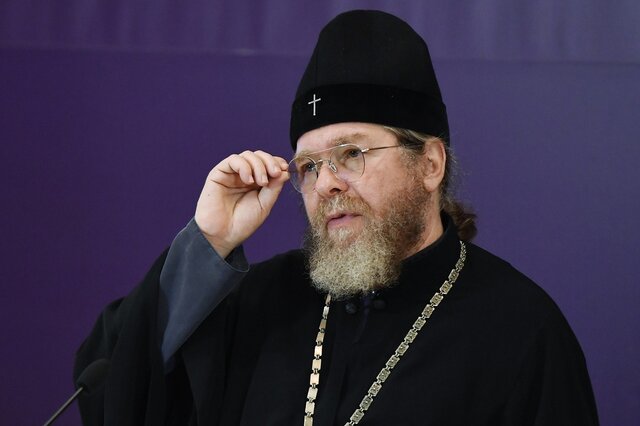
A Moscow appeals court has rejected defense lawyers' challenges to another extension of pretrial detention for Denis Popovich and Nikita Ivankovich, both former students of the Sretensky Theological Seminary. They are accused of plotting to kill Metropolitan Tikhon (born Georgiy Shevkunov), often described as Vladimir Putin's confessor.
On February 28, 2025, Russia's Federal Security Service (FSB) announced it had foiled a plot to attack Metropolitan Tikhon by two men, a Russian citizen and a Ukrainian citizen. The names of those detained were released shortly afterward: Denis Popovich, the metropolitan's aide, and Nikita Ivankovich, a fellow cleric. Both initially confessed.
The FSB said the suspects had been recruited by an officer of Ukraine's Main Intelligence Directorate in mid-2024. According to media reports, Ukrainian intelligence threatened to kill a relative of one of the detainees. The FSB claimed the attack's goal was to derail Russia–U.S. negotiations over Ukraine.
In November 2025, new searches were reported in Moscow, the Pskov region, and occupied Crimea in connection with the Shevkunov assassination case. Following those searches and interrogations, FSB officers said they had obtained information pointing to other individuals' involvement. It remains unclear who those individuals are and what legal status they now hold.
Inconsistencies in the Case
Ivankovich's lawyers say almost no investigative work has been carried out in the case, the Russian business daily Kommersant reports. The statutory time limit for the investigation has already been exceeded; it has run for more than a year, since February 12, 2025. Under Russian law, investigations into particularly complex cases may last up to 12 months. Further extensions are permitted only in exceptional circumstances.
Popovich's lawyer Maria Eismont had said that both defendants' detention had been extended until August 12, 2026 — meaning they will have spent 18 months in pretrial detention. According to Ivankovich's lawyers, investigators keep filing new criminal cases against the defendants to keep them in custody.
At the hearing, Eismont also pointed to serious inconsistencies in the case, a correspondent for the independent Russian media outlet Mediazona reports. For example, an FSB forensic examination found traces of Popovich's DNA on a juice carton that, according to investigators, had concealed an explosive device intended for the attack on Shevkunov. A QR code on the carton shows that the juice was sold on February 10, 2025. At that point, however, Popovich had already spent a month under a series of back-to-back administrative arrests. He was first detained on January 13 on an administrative charge, ostensibly for disorderly conduct, and sentenced to 16 days in jail. When that term expired, he was not released; instead, he was rearrested on a charge of disobeying the police.
The second administrative term was set to expire on February 12 — the day Popovich and Ivankovich were detained on criminal charges in connection with the alleged plot against Shevkunov. "How were traces of Popovich's DNA found on a juice carton that was purchased while he was under administrative arrest?" Eismont asked.
Eismont also said, according to Kommersant, that "the court must verify, rather than take at face value, what the investigator puts in his motion."
New Charges and Torture Allegations
Popovich and Ivankovich were initially charged under two statutes — illegal possession of explosives and facilitating terrorist activity. In May 2026, however, a new case was opened against them, adding participation in a terrorist community, terrorism training, and unauthorized access to computer data.
The defendants confessed at first. But at subsequent court hearings they recanted and declared their innocence. According to Popovich and Ivankovich, the physical evidence was planted during a search, and their confessions were obtained through torture with electric shocks.
The defendants also say that they had no motive to kill Shevkunov. They were on good terms with him and regarded him as their mentor. Popovich, as the independent Russian investigative outlet Agentstvo noted, had served as the metropolitan's aide and appeared with him at events since at least 2018.