Russia Labels Novaya Gazeta a 'Foreign Agent'
Russia's Justice Ministry designated independent outlet Novaya Gazeta as a "foreign agent" on Friday, citing its opposition to the war in Ukraine and ties to other designated agents, while also adding over 100 affiliated individuals to a related registry.
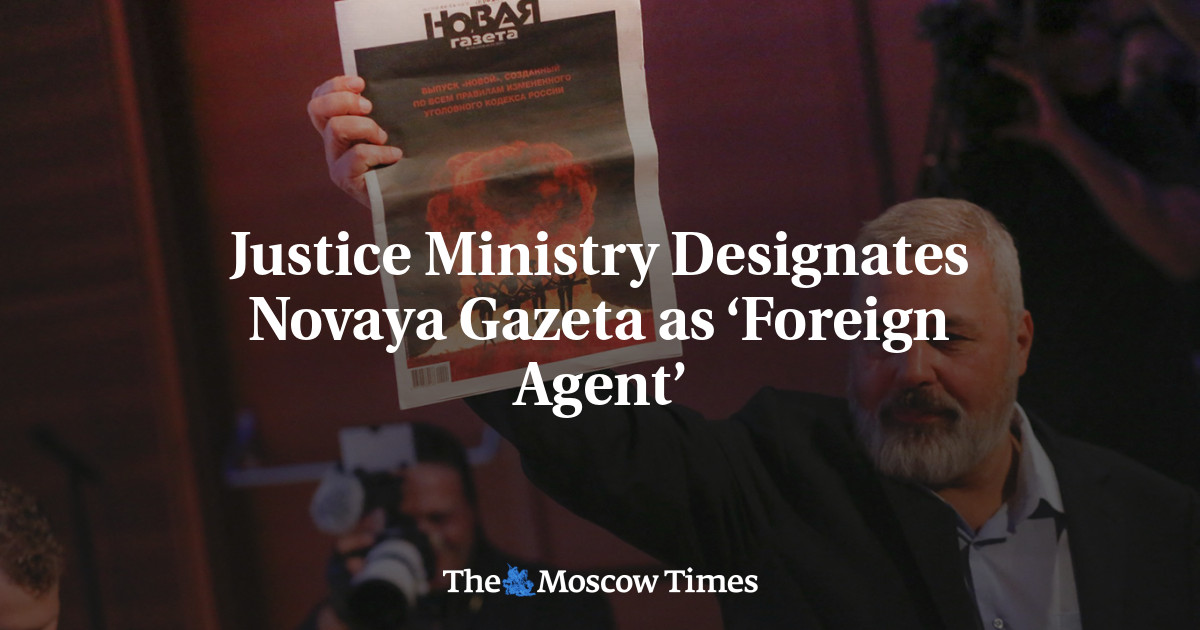
Russia's Justice Ministry on Friday added the independent online news outlet Novaya Gazeta to its list of "foreign agents." Officials accused the outlet of publicly opposing Moscow's full-scale invasion of Ukraine, spreading "false information" about elections, and cooperating with other entities already carrying the label.
Since the designation was introduced in 2012, hundreds of cultural figures, journalists, businesspeople, media outlets and organizations have been branded "foreign agents" in Russia. The label is applied to those the state considers hostile to its interests. Anyone designated must attach a lengthy disclaimer to all public statements and appearances, including social media posts.
At the same time, authorities expanded a separate registry of people "affiliated with foreign agents," adding more than 100 individuals tied to Novaya Gazeta. According to reports, the list includes Yabloko party chairman Nikolai Rybakov. Those on the affiliated list face lighter obligations but must disclose their status on any election campaign materials.
Novaya Gazeta stopped its print edition shortly after Russia's 2022 full-scale invasion of Ukraine, when the government tightened censorship laws as part of a broader crackdown on independent media. The outlet has continued publishing articles and videos online. Its former editor-in-chief, Dmitry Muratov, received the 2021 Nobel Peace Prize for his work defending freedom of expression.
The same day, the Justice Ministry also designated writer Felix Sandalov, poet Sergei Leibgrad, scientist Tatiana Tatarinova and the academic journal Historical Expertise as "foreign agents," bringing the total registry to more than 1,250 entries. All five were accused of systematically distributing material from existing "foreign agents" or "undesirable" organizations and of spreading "false information" about government policy.