Russia has lost nearly half its schools since 2000, as classrooms fill with war propaganda
A new report from Russia's Higher School of Economics shows the country has closed almost half its schools since 2000, hitting rural areas hardest, while mandatory lessons now instill loyalty to the Kremlin and justify the war in Ukraine.
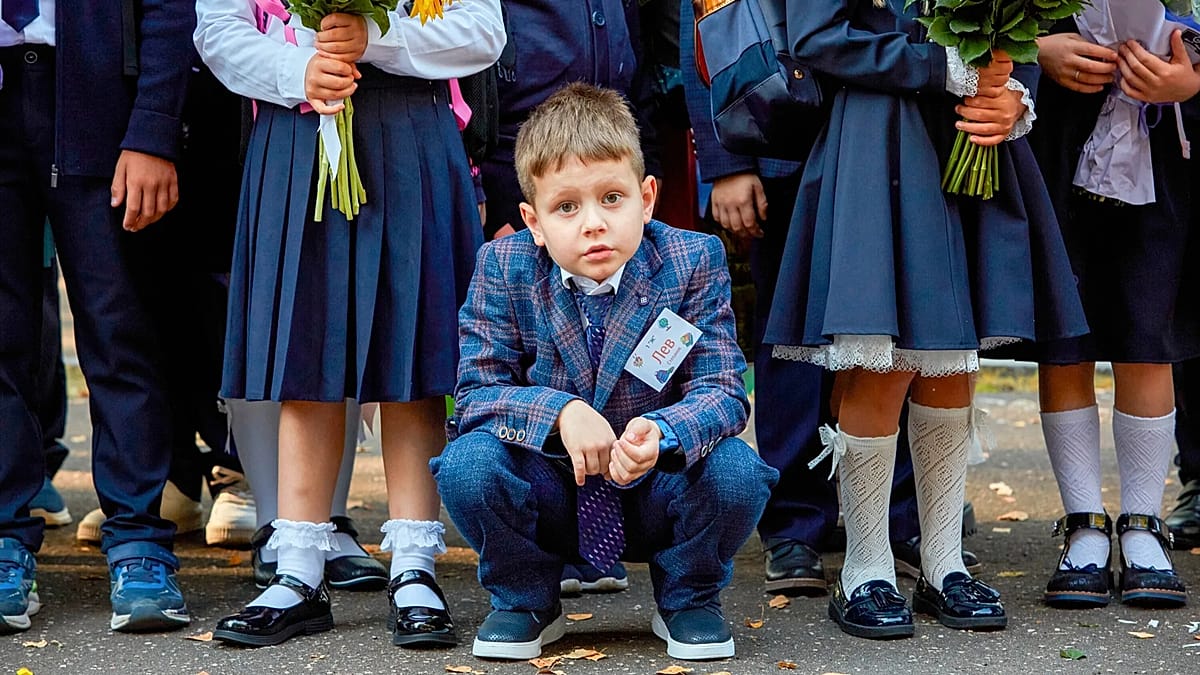
A report published this month by Russia's Higher School of Economics shows the number of schools in the country has fallen by 45% since 2000, from 68,800 to just under 38,000 in 2026. Over the same period, the school-age population dropped by only about 13.5%, from 20.5 million to 17.7 million children. Russia now has fewer schools than Germany, despite having roughly double the population — Germany counts more than 40,000 schools in 2026.
Rural areas have been hit hardest, with state schools there falling from more than 45,000 to around 21,000, a drop of more than half. Urban schools also declined, from 22,700 to 16,300. The average number of pupils per school has grown from around 300 fifteen years ago to about 470 today. Private schools increased from 635 to 982 over the period, but still account for only 2.5% of total provision.
Consequences of optimisation
The closures stem from an optimisation programme launched in 2001 that shifted school funding to a per-pupil basis, making smaller schools financially unviable. By 2010, 26% of Russia's schools had closed; roughly 10,000 more shut in the 2010s, and a further 2,300 since the early 2020s. Teachers and parents have protested the mergers, arguing that consolidated schools are harder to manage and that overcrowding hurts education quality. A 2026 study in the Russian magazine Nozh linked closures to village depopulation, noting that families often split when one parent relocates with the children to a town. The village of Atary in the Kirov region, for example, became largely abandoned after its school was shut down. Communist Party MP Dmitry Novikov has called for rural schools to be funded as strategic infrastructure rather than per pupil.
War propaganda in the curriculum
Since September 2022, all Russian schools have held a mandatory weekly class called "Conversations about What Matters," with lesson plans from the Ministry of Education covering the war in Ukraine, officially termed a "special military operation." New unified history textbooks introduced from 2023 describe Ukraine as an "aggressive anti-Russian bridgehead" and present the annexation of Crimea as correcting a historical injustice. Amnesty International researcher Anna Wright said the books hide the truth about Russian troops' crimes against Ukrainians. The textbooks were updated this summer to include a section on the Trump-Putin Alaska meeting, and were edited in part by Putin aide Vladimir Medinsky, who is under EU, US and Canadian sanctions.

/https://i.s3.glbimg.com/v1/AUTH_59edd422c0c84a879bd37670ae4f538a/internal_photos/bs/2026/3/Z/muxIyiRy2i1celt6xLWA/whatsapp-image-2026-09-26-at-19.16.41.jpeg)