Russia Gears Up for Parliamentary and Regional Elections: Key Trends to Watch
In September, Russia will hold elections for the State Duma and regional officials, with the ruling United Russia party expected to dominate, but the war in Ukraine and economic strains are reshaping the political landscape.
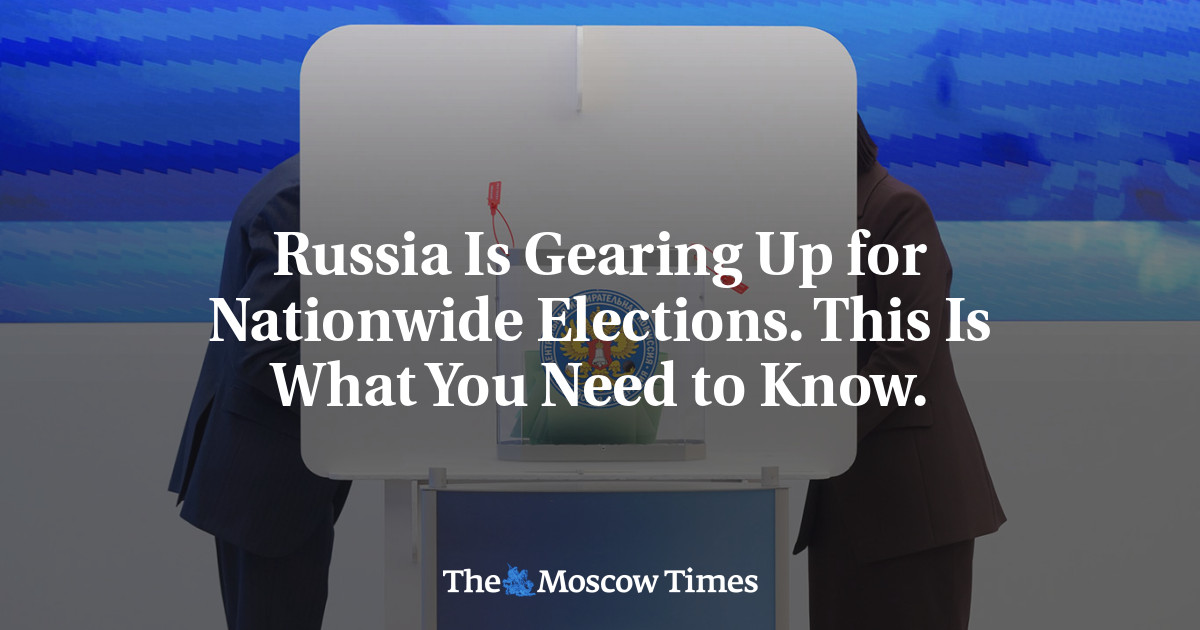
Russian citizens will head to the polls in September to elect a new State Duma and regional officials. The vote comes at a time of mounting economic pressure from the war in Ukraine and widespread fuel shortages caused by Ukrainian drone strikes. Half of Russians describe the political climate as "tense."
Which offices are up for election?
The elections will take place on September 20, Unified Voting Day. The most significant event is the three-day State Duma election from September 18 to 20, where 225 lawmakers will be chosen in single-member constituencies and another 225 through party lists. This will be the first time residents of Russian-occupied Ukrainian territories will participate. Concurrently, gubernatorial elections will be held in 11 regions: direct elections in the Tver, Belgorod, Bryansk, Penza, and Ulyanovsk regions, as well as the republics of Mordovia, Tuva, and Chechnya. In the North Caucasus republics of Dagestan, North Ossetia, and Karachayevo-Cherkessia, regional leaders will be chosen by local legislatures. Voters in 39 regions will also elect regional parliament members, and municipal elections are expected in nearly a dozen regions.
Turnout expectations and electronic voting
The Central Election Commission (CEC) says 17 political parties are eligible. Russia has about 111 million registered voters. State pollster VTsIOM reported that 66% of respondents plan to vote, with even higher turnout intentions among young people (73%). However, 66% said in May they did not know when the election would take place. Regional officials have reportedly been instructed to keep turnout at around 50%. Electronic voting, accused of being a tool for vote rigging, has been approved in 33 regions covering roughly 48 million eligible voters.
Party positions and challenges
United Russia, which holds 321 out of 450 seats in the State Duma, faces declining approval. Although wartime polling is hard to verify, support stands at about 34% and fell to 29.3% in March, compared to around 40% after the war started in 2022. Alexei Navalny's Anti-Corruption Foundation estimates United Russia's support at just 16%. President Vladimir Putin's approval has also declined but has never fallen below 65%. Authorities have lowered target benchmarks for United Russia, especially in weaker regions. The party lacks clear political direction, causing frustration among the presidential administration, governors, and members. United Russia's candidate list, unveiled after its pre-election congress, is headed by Foreign Minister Sergei Lavrov, Moscow Mayor Sergei Sobyanin, war veteran Vladislav Golovin, children's rights commissioner Maria Lvova-Belova, and war correspondent Yevgeny Poddubny. Former President Dmitry Medvedev, who formally leads the party, is not in the top five.
The main contest may be for second place. According to VTsIOM, the New People party, founded in 2020, has overtaken the Communists with about 12% support, becoming the second-most popular parliamentary party. New People criticizes internet shutdowns, tax increases, and anti-abortion measures, broadening its appeal. Other parliamentary parties – the Communist Party (10.7%), the Liberal Democratic Party (9.4%), and A Just Russia – For Truth (5.7%) – face identity crises and voter loss. The liberal Yabloko party, not in parliament, plans to campaign for an immediate ceasefire in Ukraine, freedom of information, and an end to political repression, but experts say it has little chance of winning seats.
/nginx/o/2026/10/14/17972951t1hb360.jpg)