Canada's economy in technical recession, OECD forecasts growth by 2027
Due to the slowdown caused by US tariffs, Canada entered a technical recession in late 2025 and early 2026, but the OECD projects GDP growth of 1.7% by 2027. Experts caution against panic, highlighting structural issues and trade uncertainty with the US.
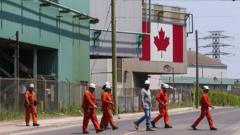
Canada has slipped into a technical recession, with two consecutive quarters of GDP decline in late 2025 and early 2026, according to the country's statistics agency. However, the Organisation for Economic Co-operation and Development (OECD) projects a modest recovery, forecasting GDP growth of 1.7% in 2027.
Economists urge against overreacting, noting the downturn is shallow and the country is likely to avoid a prolonged slump. "Whether one chooses to divine the fact that we're in a recession or not really does miss the point. The economy is weak, right?" said Jeremy Kronick, president of the CD Howe Institute.
The main headwind is US tariffs on steel, aluminum, copper, and vehicles, which have hit specific sectors and regions unevenly. James White, CEO of Ontario-based Wellmaster, said 60% of his firm's profitability depends on US market access. Sales have fallen 20% since the tariffs began, hampering investments in people and technology.
In response, Canada's Liberal government plans to double non-US exports over the next decade through expanded trade ties with Europe and Asia, and fast-track major infrastructure projects. "The government is responding in real time to shifting global economic volatility and broad-based supply chain disruption with a serious plan to grow exports, create jobs and invest in productivity forward projects," said John Fragos, spokesperson for Finance Minister François-Philippe Champagne.
But RBC CEO Dave McKay warned that capital is impatient: "We have to see tangible progress on a couple of these big ideas. The capital is impatient, and it will move where it thinks they can get the most sure and fastest return."
Structural issues such as interprovincial trade barriers and an uncompetitive tax system also hold back growth. Despite these challenges, Kronick noted Canada's fundamental strengths: a well-educated population, abundant resources, and manageable population density. "If you were drawing up a country from scratch, a well-educated, well-resourced, not overpopulated country would be what you want. I think Canada has all those things. We just have to unlock them."