New study suggests Toba eruption wasn't a near-extinction event for humanity
An analysis of sediment from an African crater lake shows that the massive Toba volcanic eruption 74,000 years ago caused only brief, mild cooling, undermining the long-standing theory that it nearly wiped out early humans.
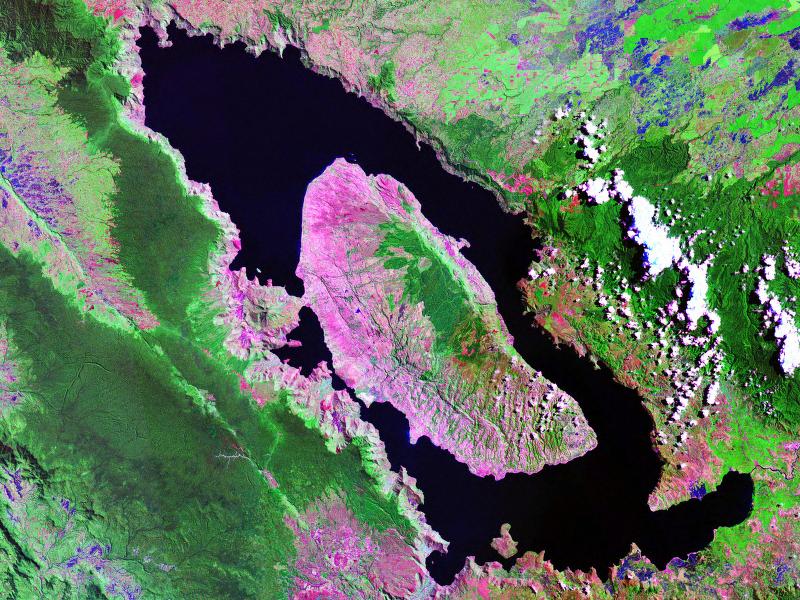
The Toba eruption, which occurred roughly 74,000 years ago on what is now Sumatra, is considered the largest volcanic event of the past 2.6 million years, releasing thousands of cubic kilometers of magma in about two weeks — around a thousand times more material than the 1991 Pinatubo eruption. For decades, some researchers suspected the eruption triggered severe global cooling that threatened the survival of early human populations.
A new study led by geoscientist Jinheum Park of Johannes Gutenberg University in Mainz, Germany, challenges that idea. Park's team examined mud cores from Lake Chala, a small, steep-walled crater lake on the slopes of Mount Kilimanjaro near the Kenya-Tanzania border. Because the lake's deep water never fully mixes, sediments settle in annual layers called varves, functioning much like tree rings for reconstructing past climate at high resolution.
Pinpointing the timing
Within 450 years of sediment surrounding a thin ash layer, researchers identified microscopic glass shards from the eruption, allowing them to determine not just that Toba occurred, but roughly when — pointing to January or February. By measuring ratios of silicon to aluminum and manganese to iron, the team estimated regional cooling of only about half a degree Celsius, with disrupted conditions lasting around 18 months.
By the third year after the eruption, sediment layers at Lake Chala had returned to their normal pattern, indicating the regional climate recovered quickly. The researchers note this modest disruption occurred against a backdrop of a much larger, gradual natural cooling trend already underway as the region moved toward glacial conditions, making Toba's contribution comparatively minor.
The team cautions that their findings come from a single lake and reflect regional rather than global climate effects, so further studies at other sites containing Toba ash are needed. They also hope to apply the same method to other major eruptions, including Los Chocoyos in Guatemala and the Oruanui eruption in New Zealand. The study was published in Science Advances.

