Son of Iran's last shah receives 'Freedom Prize' in Frankfurt
Iranian opposition leader Reza Pahlavi was given a Freedom Prize in Frankfurt on Saturday. The event drew a large rally of supporters, as well as criticism from part of the Iranian community and German parties.
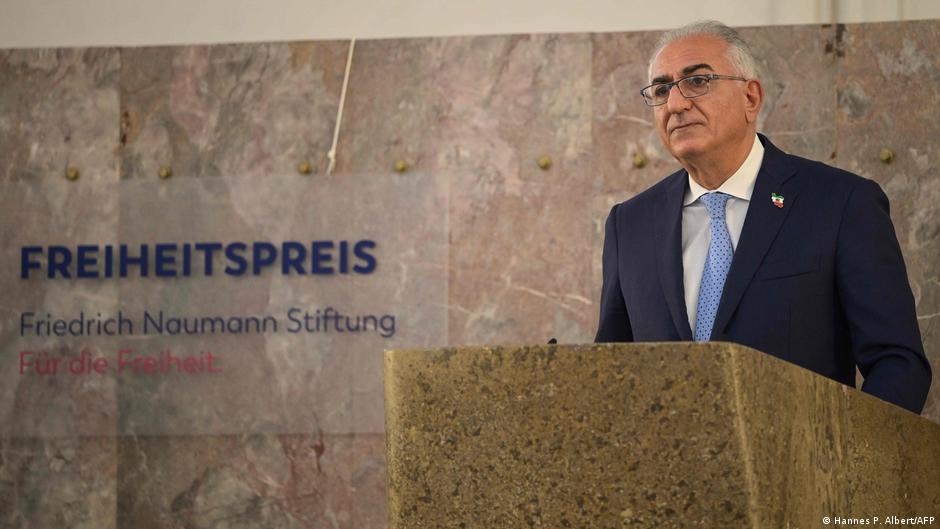
Iranian opposition leader Reza Pahlavi, son of Iran's last shah, Mohammed Reza Pahlavi, received a "Freedom Prize" in Frankfurt, in the German state of Hesse, on Saturday. The award was presented by the Friedrich Naumann Foundation, which is linked to Germany's pro-business Free Democratic Party (FDP). Police said about 18,000 people gathered in support, most of them of Iranian origin.
The ceremony took place at St Paul's Church, which hosted Germany's first elected parliament, the Frankfurt Assembly, in 1848–1849.
Pahlavi's speech
In his speech, Pahlavi said Iran is not a country waiting to be taught democracy but one that is being prevented from practising it. He argued that a people ready to die for the right to vote is ready to exercise it. Rights groups say thousands of people were killed in a government crackdown on protests in January.
Pahlavi stressed that he accepted the prize only as a "trustee" until a democratically elected government takes power, and said he would hand it over to its rightful owners in Tehran. The crowd chanted "Long live the shah, long live Iran!" His father was deposed in the 1979 revolution and went into exile; Iran then became an Islamic republic, with power consolidated around the Shiite Muslim clergy.
Pahlavi has previously offered to lead a transitional government if Iran moves to democracy. He has said he does not intend to use that role to restore the monarchy, and would leave the question to a later referendum.
Criticism
Pahlavi has become a figurehead for some factions of the anti-government protest movement, but others criticise his vocal support for Israel and say he has not distanced himself from his father's autocratic rule. About 200 prisoners held in Iran signed a letter protesting the prize, according to Sahar Sanaie, spokeswoman for the Society for German-Iranians in Hesse, cited by AFP. The letter called him a symbol of a "bygone dictatorship."
The Frankfurt branches of the Social Democrats (SPD) and the Greens boycotted the event, saying he could not be seen as a legitimate representative of the Iranian people. The Left Party argued that city statutes bar places of worship from being used for political gatherings.