Less gas stored at Inčukalns than last year; Riga heating tariff may rise to €105 per MWh
Latvia's Inčukalns underground gas storage holds less gas this year than in 2025, though officials say supply for winter is secure. EU gas prices are up 166% over a year, and Riga's heating tariff may rise 20–30% from December.
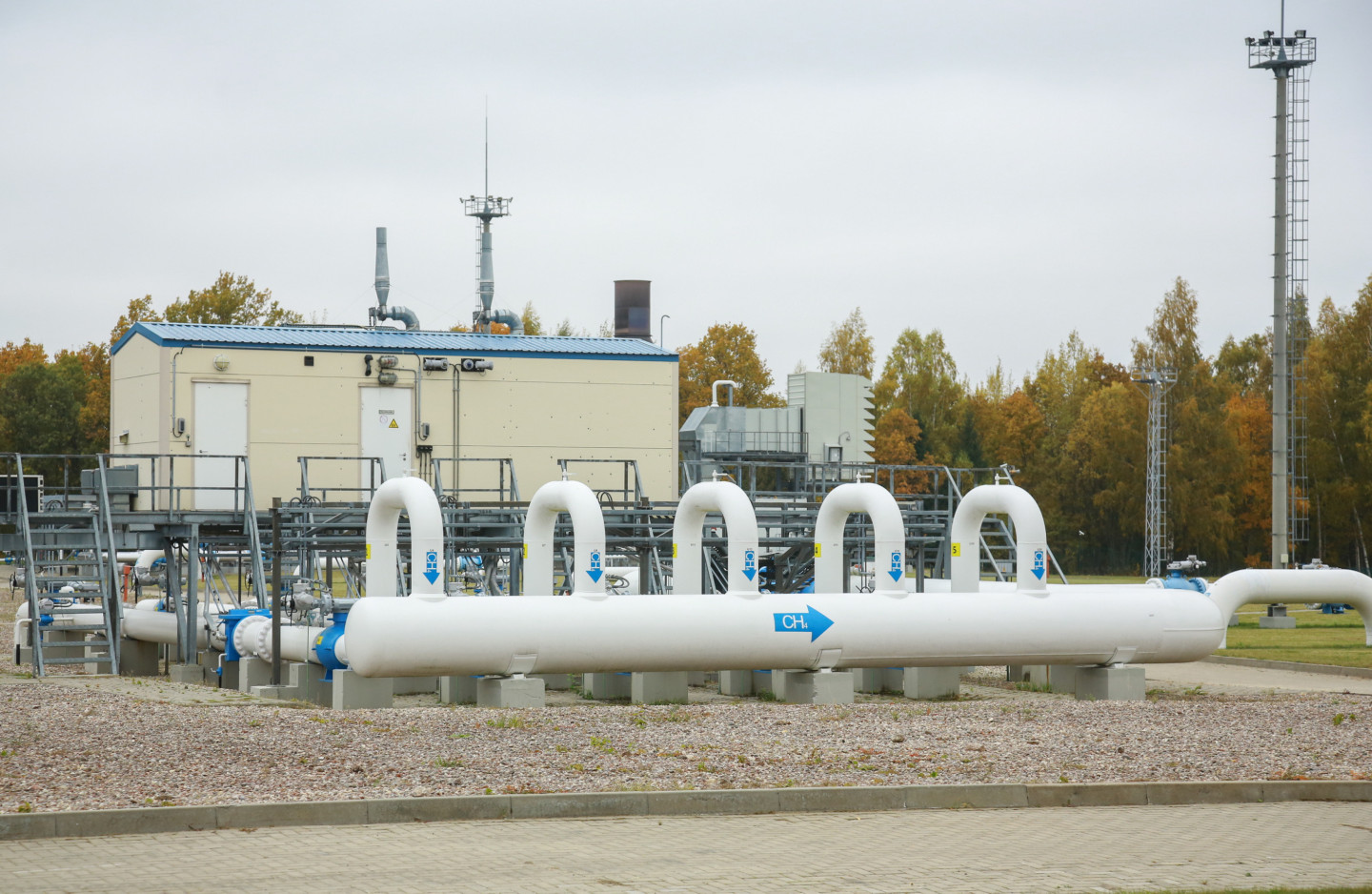
Less natural gas has been pumped into Latvia's Inčukalns underground storage facility this year than last year. The site serves Latvia, Estonia, Lithuania and Finland. Officials and the storage operator say there is enough gas for winter, but heat may cost more: in Riga the heating tariff could rise by 20–30% from December, to roughly €97–105 per megawatt-hour (MWh), excluding value added tax.
How much gas is stored
Baiba Jakobsone of Latvia's Ministry of Climate and Energy says that in early October the facility held 12 TWh of natural gas, including a 1.8 TWh state security reserve. Latvia's total annual consumption is about 8 TWh, and households use around 1 TWh. Stocks are expected to stay close to current levels this quarter, with only limited injection and withdrawal planned.
According to data from Conexus Baltic Grid, the storage and transmission system operator, the technical injection capacity recorded on 15 October was 24 TWh. Before 1 May 2025 it was 27.2 TWh, or 3.2 TWh more. The company's communications head, Dace Baltābola, stresses that this does not mean a gas shortage.
Since 2023, Latvian law has fully banned imports of Russian natural gas. Gas now arrives mainly as liquefied natural gas, for example from the US, Norway and Qatar, as well as by pipeline from Finland and the Poland–Lithuania interconnector.
Price rise
The European gas price is now €86 per MWh, 166% higher than a year ago. Events in the Middle East and disrupted shipping in the Strait of Hormuz are cited as the main reason. Before 24 February, when the US and Israel attacked Iran, the price was €30 per MWh.
Tariffs
On 1 October the Riga tariff fell from €83.01 to €80.96 per MWh excluding VAT. The heating company Rīgas siltums told a Saeima committee that the increase will not exceed 20–30%, and it plans investment in biomass, electrification and heat storage. Tariffs elsewhere differ: Baloži from November €95.02, Liepāja €87.81, Cēsis €92.82 per MWh.