Estonian universities warn new funding won't match surge in applicants
Estonia's government has pledged extra funding to expand university places for record-large graduating cohorts, but universities say it covers only about two-thirds of what's actually needed.

Estonia's government plans to allocate roughly €13 million annually to higher education over the next four years, intended to help universities absorb unusually large cohorts of students who will soon reach university age. At the same time, a previously promised boost to universities' general operating support will be cut by about €9 million.
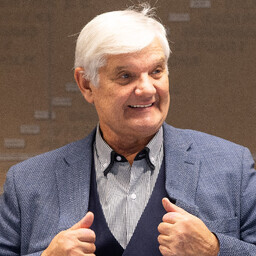
Aune Valk, vice-rector for academic affairs at the University of Tartu, says the real net increase is just over €3 million once the operating-support cut is factored in, meaning the underlying problem remains unsolved. She points out that the coming years will bring sharply larger numbers of high-school graduates, and these young people cannot simply be told to wait five years before starting their studies. Valk notes that Tartu can expand enrollment in 2027 with the new money, but afterward the situation becomes difficult, since students typically study for three, five, or six years rather than just one.
The Ministry of Education disagrees, arguing the funding is sufficient. Senior adviser Margus Haidak says the calculation already accounts for the fact that bachelor's and applied higher-education programs run at least three years, while medical studies take six. He describes the cut to operating support as unavoidable, saying higher education must share in the broader budget restraint affecting society as a whole.
Separately, Estonia aims for nearly half of adults aged 25–34 to hold a higher-education degree by 2035. Tallinn University of Technology rector Tiit Land says that goal — currently at 41 percent — is unrealistic under the present funding model, and suggests universities like TalTech may need to consider tuition fees for master's programs. Decisions on how the new funding will be divided among universities and fields of study are due in November, with priority expected to go toward areas facing the greatest labor-market shortages, though some funding will also support fields outside high-demand sectors.