Estonia wants drone elective in all high schools
This year 53 Estonian upper secondary schools offer an elective course on unmanned aircraft, with the aim of making drone education available in every high school in the coming years. A shortage of instructors for the practical training remains an obstacle.
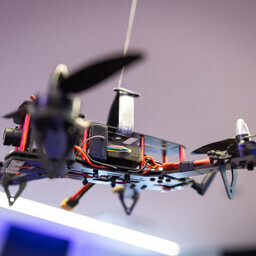
Drone technology has been introduced in Estonia as an elective course in many upper secondary schools this year. The broader aim is to make drone education available in all high schools over the next few years.
In the current academic year, 53 upper secondary schools offer the unmanned aircraft course. One of them is Tallinn's Arte High School, which has almost 1,100 students and also took part in last year's pilot. About 50 Arte students finished the course in its first year. This year the elective begins in the second semester, but roughly 100 students have already signalled interest, according to the school's drone technology teacher Karl Läll. He says demand is rising rapidly and is hard to keep up with. Läll points to the variety of uses for drones, from filming weddings to the Environmental Board mapping forests and illegal buildings.
What the course covers
The course was developed by the Ministry of Education and Research together with the Estonian Aviation Academy and the Estonian Defense League (Kaitseliit). It spans 35 academic hours and gives students theoretical and practical knowledge of unmanned aircraft, explains Aare Jamnes, head of the national defense education bureau at the Defense Resources Agency.
Theory comes first, followed by an exam run by the Transport Administration, and finally a training day with hands-on experience. An online course covers the theory, which students complete at school, for instance with a drone technology teacher. The practical day is led by Defense League instructors and includes simulator flying, operating a drone and a reconnaissance flight.
Instructor shortage
More instructors are being trained, but there are still too few to offer the course in every upper secondary school. Jamnes notes that 53 schools with one training day each means 53 days within two and a half months, or two to three days a week, with about 10 instructors needed per 20 students. Because school days are also working days, releasing instructors from their regular jobs is a further difficulty.
Drones and simulators
Some schools, Arte among them, have bought their own drones. Arte also plans to introduce simulators this year. Still, schools need not buy drones, since instructors bring all the equipment for the practical day. Nationally there are enough drones to run the course, and schools and local governments wishing to invest have been advised to consider equipping computer labs with drone simulators.