Wall Street Journal publisher found guilty in Hong Kong of deterring reporter from union post
A Hong Kong court convicted Dow Jones Publishing, the Wall Street Journal's parent company, of deterring former reporter Selina Cheng from taking up a trade union role after she was dismissed in 2024. The case has raised press freedom concerns in the city.
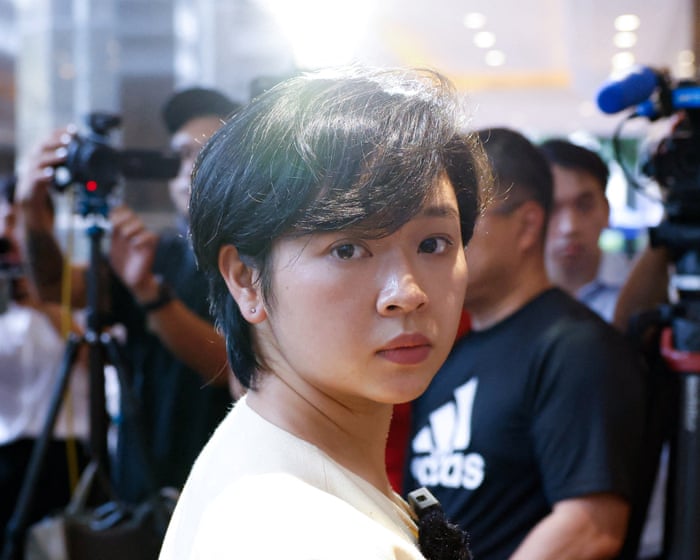
A Hong Kong court has found Dow Jones Publishing, publisher of the Wall Street Journal, guilty of deterring an employee from exercising trade union rights. The private prosecution was brought by former WSJ reporter Selina Cheng, who was dismissed in July 2024, just weeks after being appointed chair of the Hong Kong Journalists Association (HKJA). At the time, she was told the termination was due to restructuring.
Speaking outside court, Cheng, who had covered China's automobile and energy sectors for the paper, said that without adequate protection of reporters' employment rights, journalists could no longer work safely.
Court's ruling
Principal magistrate David Cheung ruled the company guilty of preventing or deterring an employee from exercising trade union rights, but acquitted it of dismissing or discriminating against her because of those rights. Cheung said Cheng's termination stemmed from a wrongful and unjustified application of the company's code of conduct, which required prior approval for her to stand as HKJA chair. He described Cheng as an honest and reliable witness.
Cheng alleged her editor had told her that employees should not be seen advocating for press freedom in places like Hong Kong, as it could be viewed as a conflict of interest. The defence argued the dismissal was due to redundancy and accused Cheng of bad faith in an earlier hearing. Both charges carry a maximum fine of HK$100,000 each; sentencing is expected at a later date.
Press freedom context
At the time of the dismissal, the WSJ said it saw no link between Cheng's union role and her termination, describing itself as a strong advocate for press freedom. Still, the case has unsettled journalists working in an increasingly restricted media environment in Hong Kong. HKJA, founded in 1968, has faced mounting pressure since Beijing imposed a national security law in 2020. Hong Kong's press freedom ranking has since fallen sharply, from 73rd place in 2019 to 140th out of 180 countries and territories in 2026.