Georgia Tech researchers build implants that communicate through body tissue
A Georgia Tech team has developed SWANS, a networking system that lets medical implants exchange signals through body tissue instead of radio waves, achieving far greater range and battery life than Bluetooth-based devices in tests on pork and live rats.
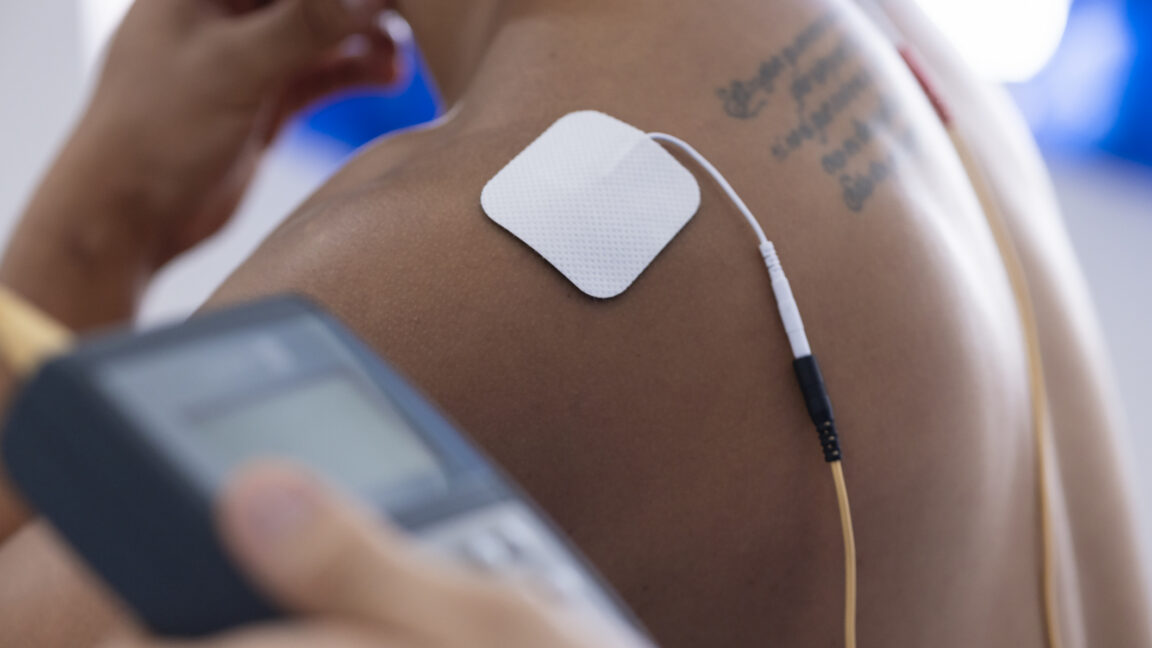
Engineers at Georgia Tech have created a new way for medical implants to talk to one another — by routing electrical signals through the body's own tissue rather than relying on wireless radio protocols.
Most implants today, such as pacemakers and insulin pumps, operate on their own or use standards like Bluetooth Low Energy or near-field communication. According to researcher Alex Abramson, these approaches run into real problems: they drain batteries quickly, radio signals weaken rapidly as they pass through tissue, and the antennas they require force implants to be bulkier than ideal.
A new approach
The new system, called SWANS, takes inspiration from the body's own nervous system, transmitting information through ionic conduction in tissue rather than radio waves. It has three parts: a wearable hub that reads sensor data and emits voltage pulses, a patch of microneedles that delivers those pulses into the body, and a network of syringe-injectable implants, each containing a sensor or actuator that reacts only to signals meant for it.
Each implant is tuned to respond only to pulses of a specific strength and duration, much like a person in a crowded room turning around only upon hearing their own name. Because the implants rely on simple, passive electronic components, they consume very little power while idle, extending battery life more than 15 times compared with Bluetooth or NFC systems.
Tests on pork and rats
The system was tested on chicken breast, bone-in pork belly with skin, and live rats. A single pulse produced a detectable signal spanning more than 30 centimeters and reaching up to 14 centimeters deep — more than ten times the range of Bluetooth or NFC. In rat experiments, signals successfully reached implants placed under the skin, in the abdominal cavity, and in the stomach, regardless of where the wearable hub was positioned.
In one experiment, a sensor on a rat's front leg sent a signal that stimulated a nerve in the corresponding hind leg, causing it to twitch. Over a two-month study, scar tissue formed around the implants, but by raising the voltage within safe limits the researchers kept communication intact, with no additional cell damage or effects on heart activity observed.
Abramson notes the system isn't designed for large data transfers, but rather for passing brief signals — such as a temperature reading — between parts of the body. SWANS has not yet been tested in large animals or humans, though preliminary large-animal studies look promising. He sees potential applications such as linking drug-delivery pumps with neurostimulators for combined therapies.