Home generator for €200 or €10,000 — which one do you actually need?
Rising interest in backup generators after storms and power outages has experts stressing that choosing the right capacity, maintaining the unit, and installing it safely matter more than price alone. Basic models start around €200, while powerful professional units can cost €10,000 or more.
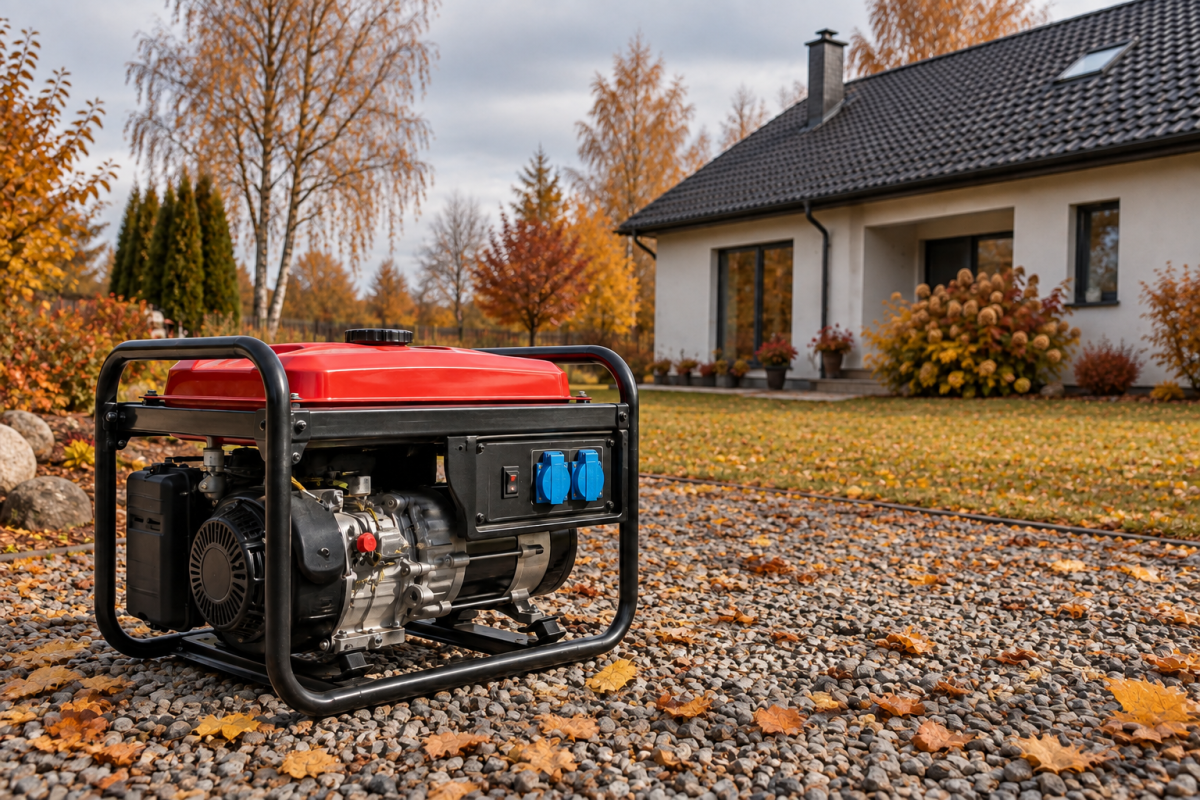
Interest in backup generators has grown following storms and prolonged power outages, with homeowners near cities—not just rural properties—increasingly considering one. Ints Purmalis, head of the service equipment segment at Inter Cars Latvija, notes that many people only realize how dependent their daily devices are on electricity once it actually goes out.
Choosing the right capacity
For most households, a 3–6 kW single-phase gasoline generator is enough to run essentials like a heating boiler, refrigerator, freezer, some lighting, an internet router, and small device charging. However, buyers need to account for the fact that devices like water pumps or refrigerator compressors can require several times more power at startup than during normal operation. Purmalis recommends building in a 20–30% power reserve and carefully considering which devices will run simultaneously.
Homes with heat pumps, electric heating, or deep-well pumps may need 8–15 kW or more, and these cases require individual calculation. For sensitive electronics such as computers, inverter-technology generators or models with automatic voltage regulation (AVR) are recommended, as they provide more stable voltage and frequency.
Price and upkeep
Basic gasoline generators start at roughly €200–600, while professional models with sound-dampening housing and automatic startup during outages can cost €10,000 or more. Higher prices generally reflect longer continuous runtime, higher-quality engines, lower noise levels, and more extensive protection features.
A common problem emerges only when a generator is urgently needed after years of disuse and fails to start, often due to stale fuel, a clogged fuel system, or a dead starter battery. Experts recommend running the unit every few months and servicing it according to manufacturer guidelines.
Safety rules
Generators must never be connected to a home's electrical system with an improvised cable—a qualified electrician should install the connection to prevent electricity from feeding back into the external grid and endangering workers. Units must also never be operated inside a home, garage, basement, or other enclosed or partially enclosed space, even with doors or windows open, since exhaust fumes contain odorless but potentially lethal carbon monoxide.