Everest glaciers face unexpected threat from climbers' urine
A new study suggests that urine left by climbers on Everest could theoretically melt more than 150 tonnes of ice each year, adding to the damage caused by climate change on the Khumbu Glacier.
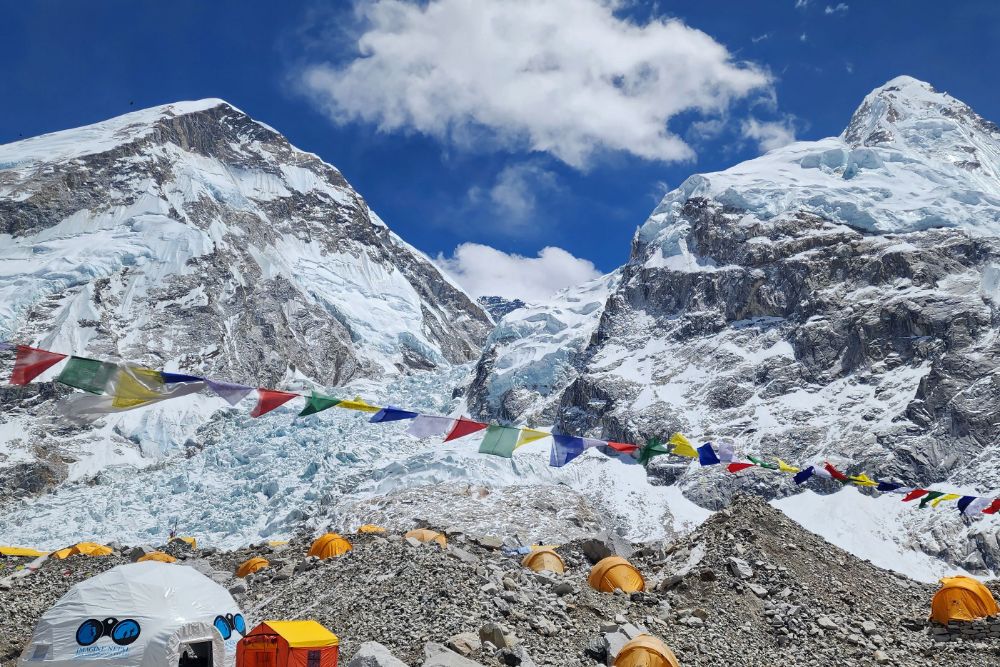
Not only climate change but also thousands of climbers' natural needs are adding to ice loss on Everest, according to an international team of researchers. They estimate that urine deposited on the ice could theoretically melt over 150 tonnes of ice and snow per year. The study, published in "Regional Environmental Change", focuses on the Khumbu Glacier on the Nepalese side of Everest.
The glacier sits near the Everest base camp at roughly 5,473 metres, where thousands of climbers begin their ascent of the 8,849-metre peak each year. The number of climbers, trekkers, and support staff in the base camp area is rising, increasing the pressure on the glacier. In the spring of 2023, for example, about 2,000 people were present in the area.
Since 2024, climbers have been required to bring their feces back down to the valley in bags, but similar rules do not apply to urine. As a result, urine is still released directly onto the ice and snow. Researchers estimate that a single climber produces about three litres of urine per day during a 50-day expedition, leading to around 330,000 litres of urine generated in the base camp area each season. Because urine is about 37 degrees Celsius, it transfers heat to the ice, causing melting. However, the scientists caution that the 154-tonne figure is a theoretical maximum; in reality some heat is lost, for instance, when liquid seeps into rocks, so the actual impact is likely lower.
Fuel use adds to melting
The research also considered fuel burned for heating and cooking. When the heat from fuel is included, the total theoretical melt could reach about 2,492 tonnes of ice and snow. The scientists suggest that moving the base camp to a dry, ice-free area could reduce human impact on the glacier and also improve safety.
But human activity on Everest causes other environmental problems, too. More than 50 tonnes of waste still accumulate on the mountain. Nepal previously ran a program paying climbers for bringing down waste, but last year it was discontinued because it did not produce the hoped-for results.