Experts warn: mattress and sock drawer no longer safe places for cash
Financial experts note that keeping all savings in cash at home is not advisable, though a small reserve for emergencies can be useful — as long as it isn't stored in obvious spots.
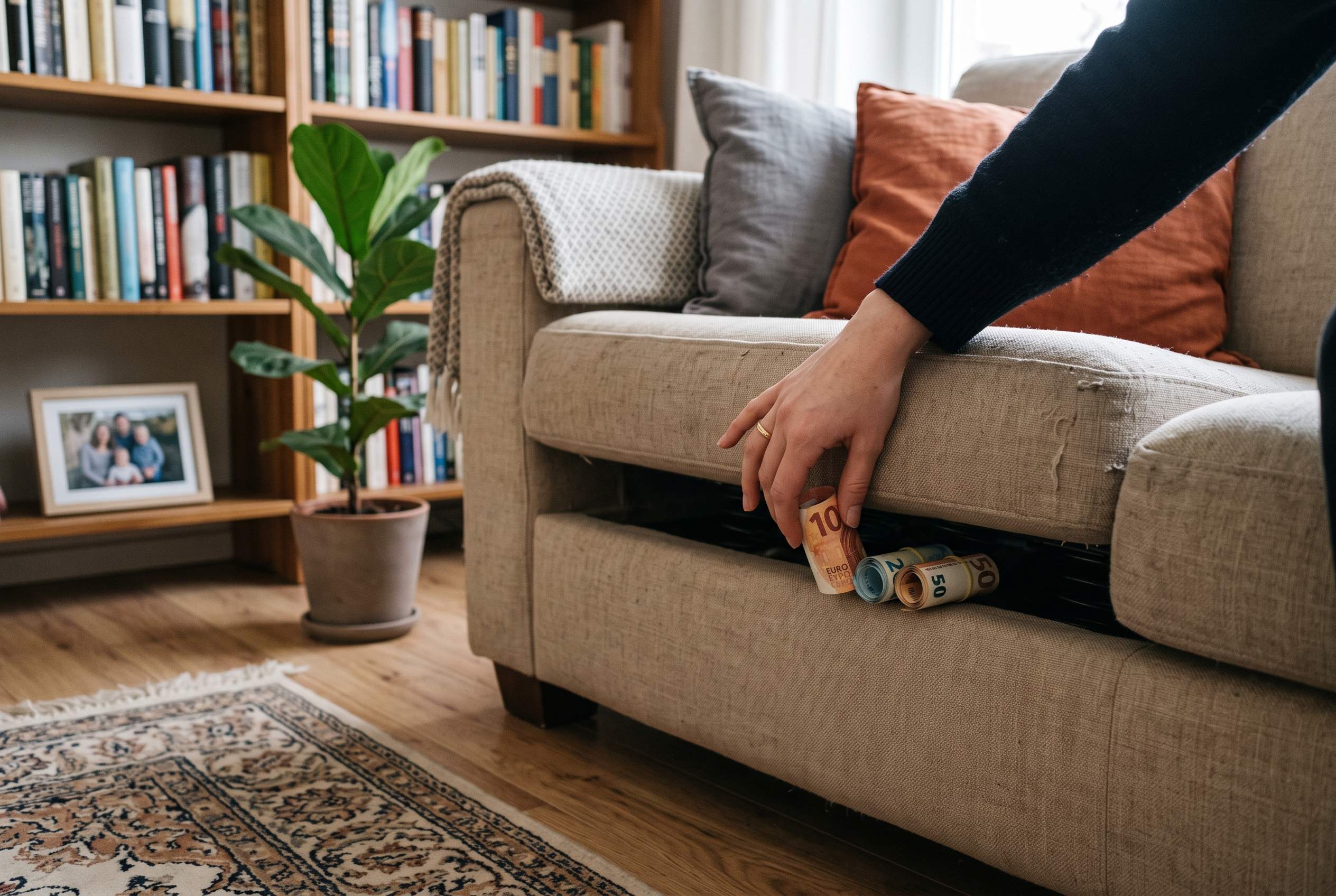
While most savings are best kept in a bank or other secure form, many people still keep a small cash reserve at home for situations where it might be urgently needed — such as a power outage or other unforeseen circumstance.
The problem arises when this money is stored in overly predictable locations. Burglars breaking into homes know exactly where to look for valuables, since most people rely on the same obvious hiding spots.
Why the most popular hiding spots fail
Among the most commonly mentioned yet least secure locations are the mattress, the laundry drawer, and a jar in the kitchen. Because these spots are widely known as typical cash-hiding methods, they are precisely where burglars search first and fastest. This means money stored this way is essentially unprotected — it will likely be found within the first few minutes of a break-in.
What to do instead
If someone still decides to keep part of their cash at home, it's advisable to choose a less obvious, unconventional location — one that isn't among the typical, widely known options. The more unusual and unexpected the chosen spot, the lower the chance that burglars will find it during a break-in, since they generally don't conduct a detailed, time-consuming search of the entire home but instead check the best-known, typical hiding places.
Experts nonetheless emphasize that for larger sums, a bank account or another official savings method remains the safest option, while only a small amount for emergencies should be kept at home.

/nginx/o/2026/07/31/17818514t1h5aca.jpg)
