Expert: US plan ties Ukraine talks to Europe's security, favors Russia
Kristi Raik, director of Estonia's International Center for Defense and Security, says a US idea to link Ukraine peace talks with European security concedes ground to Russia. European leaders, including EU foreign policy chief Kaja Kallas, have rejected any US-Russia deal on the matter.
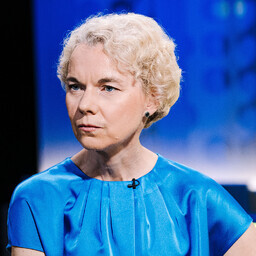
A U.S. plan to link Ukraine peace talks with European security issues is a concession to Russia, according to Kristi Raik, director of the International Center for Defense and Security (ICDS) in Estonia. She said Estonia and the other two Baltic states need a united European voice at the negotiations.
Speaking on the Estonian public broadcaster's program "Aktuaalne kaamera", Raik said this is exactly what Russia has demanded from the outset. Europe's stance, she explained, is that the war must be ended first, and only then should discussion begin on whether any changes to Europe's security architecture are needed. Russia, by contrast, wants veto power over matters concerning Europe.
Who will speak for Europe is unclear
Europe does not want to be left out of the talks, but it is unclear who would represent it. Raik said the Baltic states could advance their interests through such representation, though securing a seat looks unlikely. In her view, expecting direct Baltic representation is unrealistic, but the Baltic states can work to ensure Europe is represented as united as possible and with common positions.
An academic's assessment
Holger Mölder, an associate professor at Tallinn University of Technology (TalTech), noted that grand plans packed with impressive-sounding adjectives have come from across the Atlantic before, almost like a family business selling its products. He said U.S. diplomacy seems to be run by a private company, with President Donald Trump's business partners, the Kushner and Witkoff families, brought in. Mölder compared this to mafia movies and the criminal underworld.
European leaders push back
European leaders, led by EU foreign policy chief Kaja Kallas, have rejected any US-Russia deal on Europe's security. Kallas has insisted that Europe already has a security architecture, that Russia is the one breaking the treaties behind it, and that "Putin does not have a veto over European security." The pushback follows Trump's claim that a "big beautiful deal" may be around the corner.