Exmoor hosts 10th dark skies festival to highlight light pollution
Exmoor national park in south-west England held its 10th dark skies festival in October. It invited visitors to watch the stars and think about the effects of light pollution.
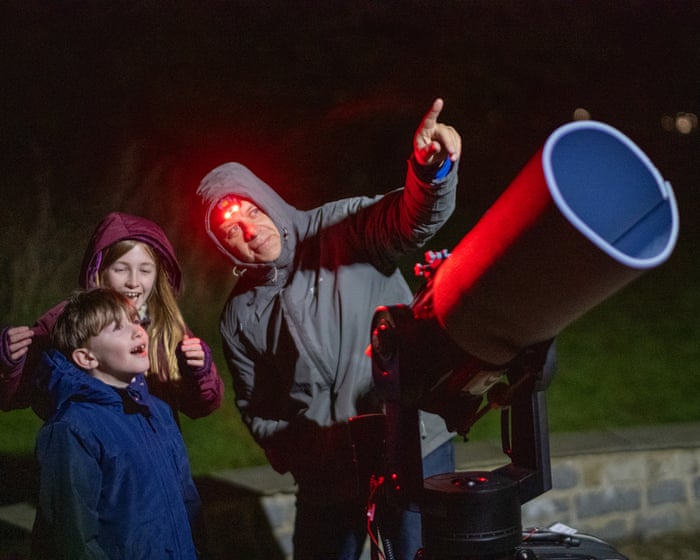
Exmoor national park in south-west England held its 10th dark skies festival in October. The park is Europe's first designated international dark skies reserve. The event aimed to let people see the night sky that light pollution hides at home, and to encourage them to think about protecting their surroundings.
Throughout October, visitors travelled to the park from across the region's south-west and were guided in the evenings by astronomers and ecologists from the national park. Families took part in fireside question-and-answer sessions, looked through telescopes and joined bioluminescence walks in the woods.
Astronomer and teacher Jo Richardson, who runs the space science workshop business Space Detectives with her husband Peter, also an astronomer, stressed that the aim is not to switch off all lights but to use them wisely. She spoke about Saturn, which is on average about 800m miles away and can be seen through a telescope on Exmoor.
Light pollution in numbers
According to research cited in the source, the night sky grows 10% brighter every year as light pollution increases. The Light Pollution Map ranks the UK as the 14th most light-polluted country in Europe. Pollution is measured on the Bortle scale, which has nine levels: a nine is as bright as central London, while a one is among the remotest places on Earth, such as Chile's Atacama desert. The darkest zone of Exmoor is a two.
Why darkness matters for wildlife
Kate Lacey, an ecologist at Exmoor National Park Authority, says darkness is also vital for local wildlife. The park is home to rare Bechstein's and barbastelle bats, which rely on darkness for hunting, navigation and migration. Artificial light also disrupts salmon, for which Exmoor is an important spawning ground, and makes them less likely to survive.
Clouds covered the sky later in the evening and brought the event to a close. The organisers hope visitors will keep looking up and thinking about how light pollution threatens what can be seen.