Europe heatwave: Germany and Italy hit 40C as records fall across continent
A severe heatwave has swept across Europe, bringing record temperatures to Germany, Italy, and other countries, causing deaths in France, infrastructure damage, and healthcare strain. Scientists say such a heatwave would have been virtually impossible without human-induced climate change.
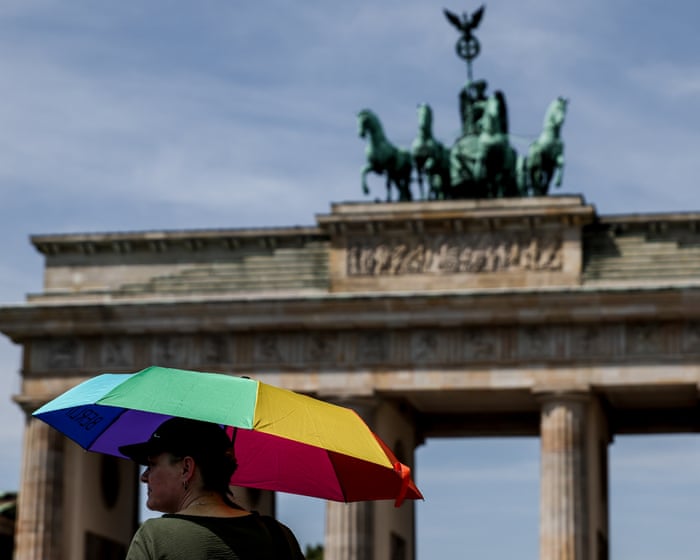
On Saturday, Germany and Italy endured sweltering conditions as a heatwave linked to dozens of deaths in Western Europe spread eastward, with temperatures exceeding 40°C (104°F).
Denmark registered its highest temperature on record on Saturday, reaching 36.6°C north of Odense, according to the Danish Meteorological Institute. Slovakia confirmed that Friday night was its warmest on record, with temperatures not dropping below 26.3°C.
Scientists stated that the heatwave would have been virtually impossible without human-caused climate change, which has made this week's nighttime temperatures 100 times more likely than they would have been two decades ago.
Records in Germany and Italy
A German record of 41.3°C was preliminarily reached near the city of Saarbrücken close to the French border on Friday. On Saturday, extreme heat warnings were in place for nearly all of Germany, and authorities urged people to save water. Temperatures of 36°C were expected across the country, with local highs up to 42°C possible.
Italy's health ministry issued a red alert for 18 cities, including Milan, Rome, Turin, Venice, Genoa, Florence, and Bologna, for Saturday and Sunday, with temperatures expected to climb as high as 39°C.
Impact in France and beyond
In France, dozens of people, both young and old, have died during the heatwave. Temperatures above 40°C disrupted rail travel and power generation, prompted alcohol bans, school suspensions, and the postponement of outdoor events. The French prime minister's office said that although the heatwave was moving on, pressure on the healthcare system would persist and hospital admissions would remain high for several days.
Reports of wildfires in France are up compared to the same period last year due to the heatwave. Infrastructure has suffered, with buckling roads and train tracks. Germany's national rail operator, Deutsche Bahn, allowed customers to cancel long-distance bookings into early next week without charge, citing strain from sun exposure and risks from thunderstorms and wildfires.
Near Hamburg, a section of the A7 motorway, one of Germany's busiest highways, was closed after the heat caused the asphalt to split.
Cultural and sporting events
The start of the Milan Pride march was delayed to avoid the worst of the heat. The Ironman European Championship long-distance triathlon in Frankfurt on Sunday shortened its cycling and running courses.
Calls for water conservation
André Berghegger, CEO of the German Association of Towns and Municipalities, urged the public to use water sparingly, advocating for voluntary cooperation before any bans.
Forecast and long-term effects
The most extreme heat is forecast to begin fading over the weekend, with heavy thunderstorms expected on Sunday. According to Reuters' climate monitor, temperatures have pushed up to 18°C above seasonal averages, driven by an omega block—a phenomenon where hot air is trapped over regions with cooler air on its fringes.
Demand for electric fans has surged, and Asian air-conditioning manufacturers have reported a European sales boom. Most housing stock in Northern Europe is built to retain heat rather than withstand it, exacerbating the situation.