Ebola outbreak in DR Congo may involve mutating virus as cases pass 4,000
Health officials fear the Ebola virus behind the DR Congo's massive outbreak could be mutating, with confirmed cases exceeding 4,000. The Africa CDC is scaling up response, moving from contact tracing to door-to-door searches and investigating the virus's severity.
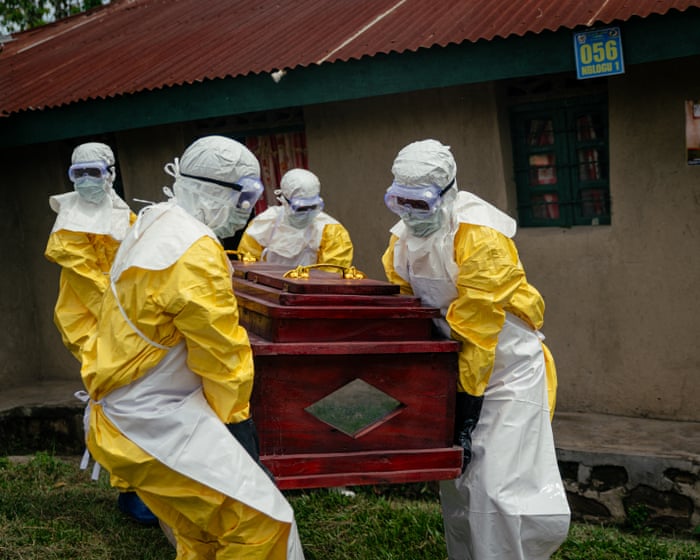
Health officials have voiced concerns that the Ebola virus driving a massive outbreak in the Democratic Republic of the Congo (DRC) may be changing, as the number of confirmed cases surpasses 4,000. The outbreak is caused by the Bundibugyo strain and was first reported on 15 May, though authorities suspect the disease may have been circulating since January.
According to the DRC's national public health institute, 3,973 cases and 1,801 deaths had been recorded as of 4 August. Dr Jean Kaseya, director general of the Africa Centres for Disease Control and Prevention (Africa CDC), confirmed at a Thursday briefing that cases had topped 4,000. The outbreak is now the second-largest Ebola outbreak on record: eleven weeks in, it has eight times more cases and six times more deaths than the West Africa Ebola outbreak of 2014–18, which infected more than 28,000 people and killed at least 11,000.
Kaseya said he had discussed with WHO Director General Dr Tedros Adhanom Ghebreyesus plans to conduct studies to determine whether the virus is mutating, given the unprecedented severity of the Bundibugyo outbreak.
More than two-thirds of Ebola deaths are occurring in the community rather than in treatment centres. At a Médecins Sans Frontières facility in Bunia, the capital of Ituri province, 90% of admitted patients are not on authorities' contact lists. Kaseya acknowledged that contact tracing is insufficient: only 10 contacts are identified per patient, when roughly 40 would be expected.
The outbreak is centred in conflict-affected Ituri province, a mining region, and has spread to Nord-Kivu, Sud-Kivu, Haut-Uele and Tshopo. Neighbouring Uganda recorded 20 cases before bringing its own outbreak under control.
Africa CDC is planning a shift from contact tracing to active case search, with community health workers going door to door. Acting head of emergency preparedness and response Dr Wessam Mankoula said the time for incremental action was over. Kaseya promised a village-centred response involving communities, greater use of digital tools, and enhanced action in camps for internally displaced people.
Authorities plan to begin using the antiviral remdesivir on a compassionate-use basis and will test whether the Ervebo vaccine, licensed for a different Ebola strain, should be offered. Recent data suggest Bundibugyo caused less severe disease and no deaths among vaccinated people.
The DRC is investigating a suspected Ebola death on a boat travelling from the north-east to the capital Kinshasa; other passengers will be quarantined and tested. UNICEF warned that essential healthcare is being disrupted, as fear and service stoppages keep families away from clinics. In the outbreak's epicentre, the mining town of Mongbwalu, the proportion of children receiving their first measles dose has fallen by 69%.