Beverage carton recycling in Latvia grows 2.5 times in two years
The amount of milk, kefir and juice cartons recycled through "Eco Baltia vide" rose from 163 to 408 tonnes between 2023 and 2025. Residents are urged to sort such packaging correctly as Latvia will soon need to double its recycling rate.
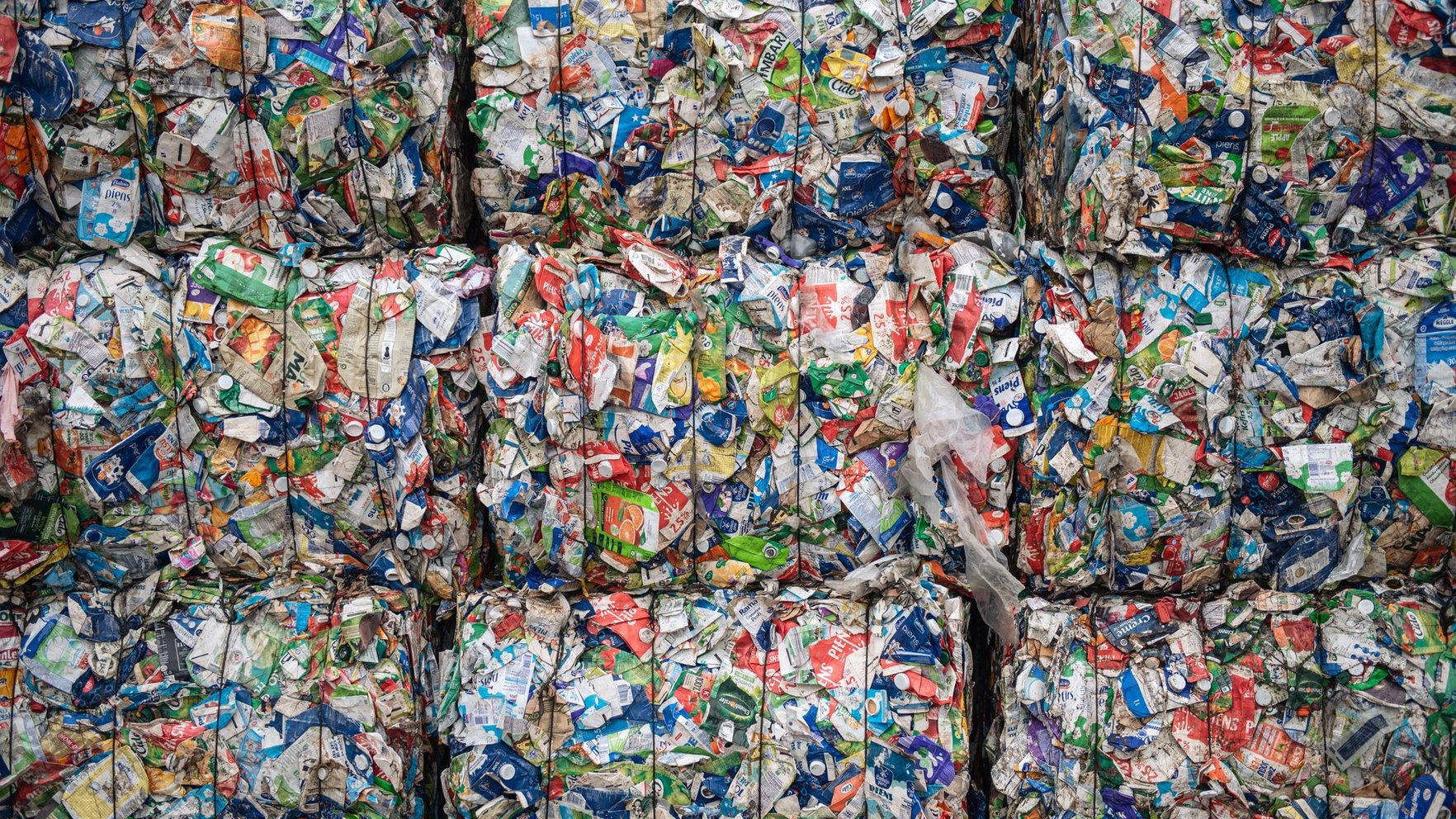
Waste management company "Eco Baltia vide" reports that the volume of beverage cartons collected for recycling in the areas it services has grown by more than two and a half times over the past two years. In 2023, the company collected and recycled 163 tonnes of such packaging; by 2025 the figure had reached 408 tonnes, an increase of 245 tonnes. The company notes these numbers do not reflect the situation across all of Latvia, but views the growth as evidence that residents are willing to sort waste when suitable containers and clear rules are available.
The current recycling target for composite beverage packaging is 25%, but by 2029 it must rise to 50% of the volume placed on the market — meaning the total amount recycled nationally will need to roughly double in the coming years.
Why recycling is complicated
Beverage cartons are made of layered materials — paper fibre, plastic and sometimes aluminium — so separating them into raw materials requires specialized facilities. Cartons collected by "Eco Baltia vide" are sent to a Stora Enso plant in Poland, where they are broken down into paper fibre, polymers and aluminium foil. When cartons end up in unsorted household waste, they are often contaminated with food residue, which lowers the quality of recovered material and raises sorting costs.
Where and how to sort
In areas served by "Eco Baltia vide", beverage cartons should go into the yellow bin along with plastic, paper and metal packaging, though requirements can vary by waste operator, so it's worth checking the markings on the container or the operator's website. Where only a separate paper or plastic bin is available, some operators accept cartons there as well. The nearest sorting point can be found on the "Latvijas Zaļais punkts" digital sorting map.
Importantly, beverage cartons should not be returned via the deposit machines — the deposit system only accepts marked PET and glass bottles as well as metal cans. Before disposal, cartons should be emptied, rinsed lightly if needed, and flattened, though they don't need to be spotless — the key is ensuring no liquid or significant food residue remains inside.

/nginx/o/2026/10/05/17956391t1h11c3.png)