Report: Gaza displacement camps face dire conditions as 'Yellow Line' expands
The Danish Refugee Council says nearly 1.8 million Palestinians in Gaza are living in inhumane displacement camp conditions, while Israel's so-called Yellow Line keeps creeping westward.
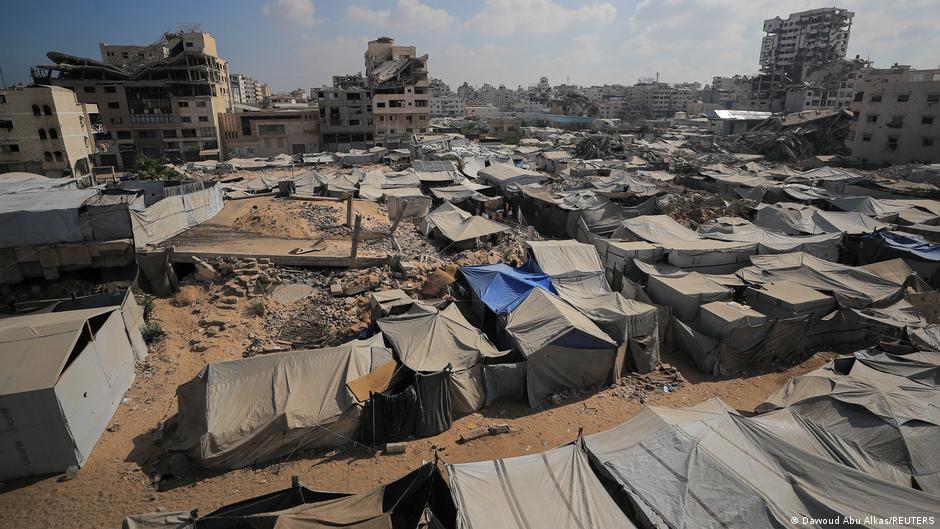
The Danish Refugee Council (DRC) published a report on Thursday finding that nearly a year after the October 2025 ceasefire plan, most of Gaza's population still lives in dire displacement conditions. The group says the ceasefire, meant to end civilian suffering, exists largely in name only, with displacement having merely changed shape rather than ending. The findings draw on discussions with 195 people across five governorates in Gaza.
Yellow Line creeping westward
The report accuses Israel of pursuing a policy of protracted displacement, citing the so-called Yellow Line — the boundary marking Israeli military-controlled eastern Gaza — as a key tool, saying it continues expanding toward the coast. A DRC country director said the line is squeezing families into roughly 30% of Gaza's territory. The UN has also reported westward movement of the line, while Israeli Prime Minister Benjamin Netanyahu recently put the share inside the line at 60%, while confirming plans for further expansion. The report says aid groups cannot operate within several kilometers of the line, blocking supplies from reaching nearby camps.
Harsh camp conditions
The DRC and the Agricultural Development Association found 80% of respondents report water shortages, households relying on outdoor cesspits, shared latrines raising gender-based violence risks, rodent infestations, food scarcity and unsafe cooking conditions, and rapid spread of illness — over 4,000 chickenpox cases were recorded in Khan Younis camps in July alone. Only half of hospitals and just over a third of primary healthcare centers remain operational, while formal education has been largely absent for almost three years in some areas. The report also flags security risks from artillery, drones and unexploded ordnance, along with rising domestic violence and mental health concerns. Only 36% of sites have a designated site manager coordinating services.
Recommendations
The DRC called on all parties to fully uphold the ceasefire, urged Israel to halt further expansion of the Yellow Line and disclose its route, and asked the international community to support a UN mechanism monitoring ceasefire violations. It also warned that political and donor attention has declined sharply despite conditions not improving. Israel has not yet commented on the report.
