Remains of medieval Tsar Samuel returned to Bulgaria after decades-long dispute with Greece
Greece has handed over the remains of medieval ruler Tsar Samuel to Bulgaria following decades of negotiations, in a ceremony that Greece's prime minister linked to his push for the return of the Parthenon marbles from Britain.
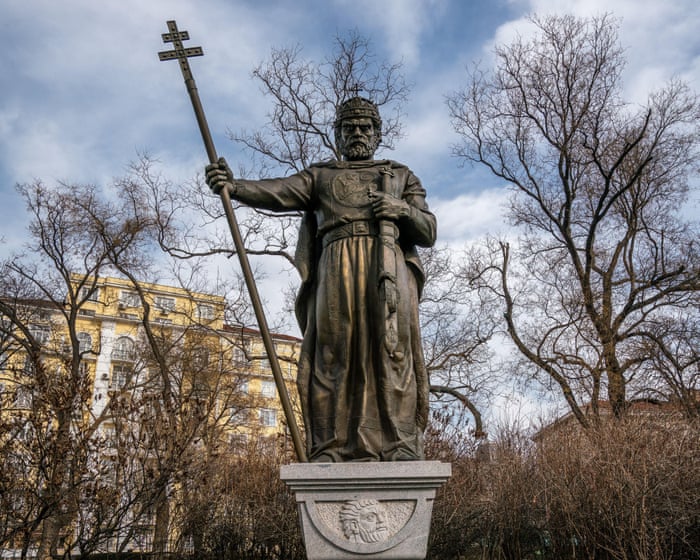
The remains of medieval Bulgarian ruler Tsar Samuel are being flown to Sofia on Saturday, closing out decades of talks between Bulgaria and Greece over their return. The remains, unearthed in a Greek border area six decades ago, will travel aboard a military aircraft and be welcomed with full state honours — a fighter jet escort, a 21-gun salute, and a procession to the Church of St Sophia, where members of the public will be able to pay their respects.
Samuel ruled in the early 11th century and fought extensively against the Byzantine empire to grow his kingdom, before being defeated and dying soon after, in 1014. He is widely regarded as a symbol of Bulgarian national identity.
The handover follows an agreement reached earlier this week between the two countries' culture ministers, under which Bulgaria will return religious relics taken from Greek monasteries during the first world war. Some prominent Greek academics and religious figures have questioned whether Bulgaria's offerings are sufficient.
Ahead of the handover, a ceremony took place at the Museum of Byzantine Civilization in Thessaloniki, where the remains had been held, attended by Greek prime minister Kyriakos Mitsotakis and Bulgarian president Rumen Radev. Radev said the relics belong to both peoples and represent a shared memory and bond, adding that while Samuel once divided the two nations, he now unites them and strengthens their strategic cooperation.
Mitsotakis said he hoped the gesture would support Athens's ongoing effort to persuade Britain to return the Parthenon marbles — sculptures over 2,500 years old taken from the Acropolis and currently held by the British Museum. He argued that the world is reassessing its approach to protecting cultural heritage, and that monuments and historical treasures should not be treated as spoils of war.

/nginx/o/2026/09/24/17936074t1h8255.jpg)