Braže: Russia shifts to long-term war footing, seeking to undermine European unity
Latvian Foreign Minister Baiba Braže said in Warsaw that Russia is using unconventional tactics to weaken European unity and support for Ukraine. Meeting participants signed a joint declaration on backing Ukraine and tightening sanctions.
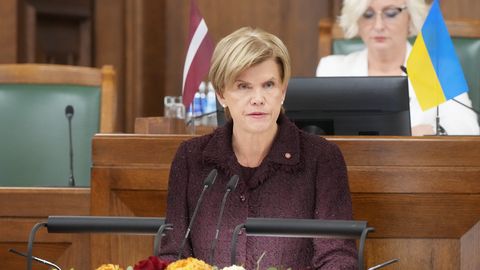
Russia is moving to a long-term war footing, carrying out wide-ranging unconventional actions meant to undermine unity among European countries, weaken their resilience and reduce support for Ukraine. Latvian Foreign Minister Baiba Braže (of the Unity party) stressed this on Friday, 7 November, in Warsaw, where she took part in a meeting of foreign ministers of the Council of the Baltic Sea States and Ukraine. The Latvian Foreign Ministry relayed her remarks to the LETA news agency.
Topics of the meeting
The talks focused on regional security, including the threat of Russian unconventional warfare and the illegal migration pressure orchestrated by Belarus. Participants discussed support for Ukraine, paying particular attention to aid ahead of the coming winter, as well as the role of European countries in peace talks on Ukraine.
A joint declaration was signed on continued support for Ukraine, achieving a just and lasting peace, tightening sanctions on Russia and strengthening European security.
Braže calls for a firmer approach
Braže noted that Russian provocations and sabotage could affect any ally. Europe therefore needs to keep strengthening its resilience, maintain economic pressure and Russia's international isolation, and reinforce sanctions. She urged that Russian athletes and artists be kept out of international events, that former Russian soldiers be denied entry to the European Union, and that Russian citizens not be allowed to benefit from EU tourism privileges.
The minister also described the growing illegal migration pressure organised by Belarus on the Latvian border. This year Latvia has already prevented almost 13,000 cases of illegal crossing of its border, which is also the EU and NATO border. She described the pressure as part of a broader Russian attack on European security.
Support for Ukraine
Participants confirmed their readiness to continue military, humanitarian and financial assistance to Ukraine. Special attention went to strengthening the resilience of Ukraine's energy infrastructure and boosting air defence capabilities, given intensified Russian attacks on civilians and on critical and civilian infrastructure. On Ukraine's finances, participants agreed that a solution must be found to fund the country's budget and defence needs in 2027.
The meeting was attended by the foreign ministers of Poland, Estonia, Norway, Finland, Germany and Ukraine, and by EU High Representative for Foreign Affairs Kaja Kallas. Iceland, Denmark, Sweden and Lithuania were represented by officials delegated by their foreign ministers.


