Bosnia holds general election overshadowed by banned pro-Russian politician as EU bid stalls
About 3.4 million Bosnian voters went to the polls Sunday to choose the country's tripartite presidency, parliament and entity leaders, with the campaign dominated by banned pro-Russian figure Milorad Dodik while EU membership progress remains stalled.
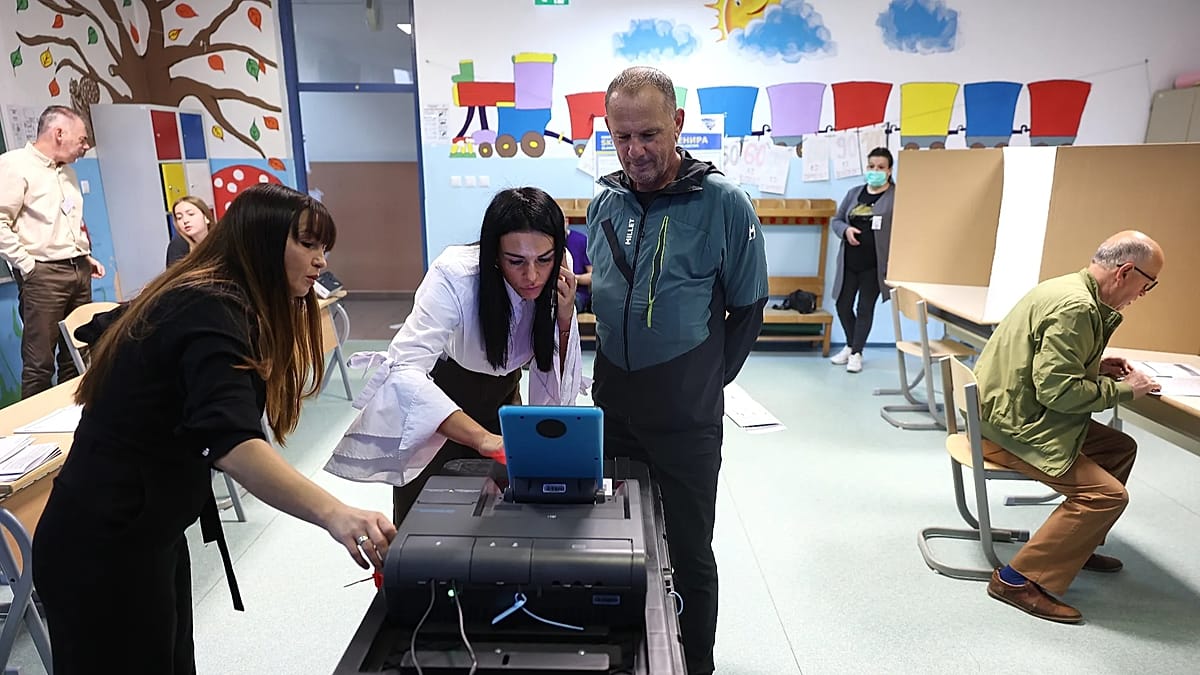
Polling stations opened across Bosnia and Herzegovina on Sunday as roughly 3.4 million eligible voters cast ballots for the three-member multi-ethnic presidency, national lawmakers, and leadership of the country's two entities — the Muslim-majority Federation of Bosnia and Herzegovina and the Serb-led Republika Srpska. This intricate governing structure stems from the US-brokered 1995 peace accord designed to balance power among Bosniak Muslims, Orthodox Serbs and Catholic Croats.
Voting at several locations was delayed because of glitches with newly introduced digital systems, including electronic voter identification and ballot scanning, brought in for the first time to reduce the fraud and manipulation that tainted confidence in past elections. Most of the 75 competing parties are organized along ethnic lines, with Bosniak and Croat nationalist parties each campaigning to protect their communities' interests.
Dodik's shadow over the race
Although barred from the ballot, former Republika Srpska president Milorad Dodik, a pro-Russian separatist, has dominated the election narrative. He is banned from holding public office following a conviction for defying the international envoy who oversees the peace agreement. Having just returned from a meeting with Russian President Vladimir Putin in Moscow, Dodik leads a party expected to win in Republika Srpska. At a final campaign rally in Banja Luka attended by Russia's ambassador, Dodik declared Bosnia "dead" and "an impossible country." Analysts say the office ban has failed to diminish his influence, which he continues to exploit through heavy media presence.
Deep divisions and foreign influence persist
Despite years of relative peace, Bosnian politicians continue to stoke ethnic divisions, with Bosnian Serb leaders pushing for their entity's secession, fueling Western concerns about renewed instability. Bosnia remains among Europe's poorest nations and its formal EU membership bid has stalled despite reform pressure from Brussels. Russia continues to obstruct EU enlargement in the Balkans while backing Republika Srpska, while a US-linked corporation is pushing a $1.5 billion liquefied natural gas pipeline project as Washington seeks its own foothold. Tensions were further inflamed recently by tributes paid in Serbia and among Bosnian Serbs to wartime commander Ratko Mladic, who died in August while serving a life sentence for genocide, drawing EU criticism and angering Bosniak politicians.