Bangkok battles deadly floods as streets turn into stagnant lakes
Relentless rainfall has left large parts of Bangkok submerged under stagnant floodwater, killing more than 40 people and forcing thousands into shelters, with experts warning such extreme downpours are becoming more frequent in the region.
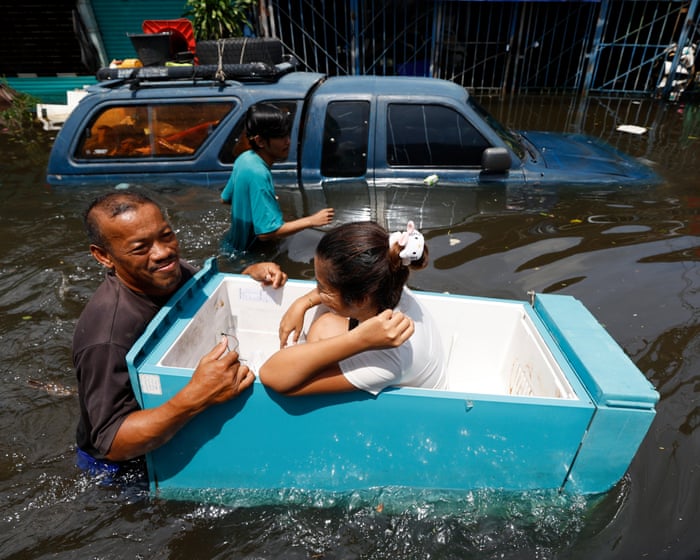
Bangkok, long accustomed to brief afternoon downpours that turn streets into temporary rivers, has this week faced something far worse: entire neighbourhoods submerged in stagnant, murky water that has lingered for days. In some areas, around 300mm of rain fell within roughly 48 hours — equivalent to half a year's average rainfall in London.
Thai authorities say about 40 people have died in flood-related incidents, with deaths attributed to drowning and accidental electrocution. More than 230 shelters across the capital have housed thousands of displaced residents.
Suleemas Kurangkul, a 73-year-old resident, described last weekend's rain as unlike the usual evening storms, continuing "all day, all night" as water levels kept rising. Her home, the 1970s Khlong Chan flat complex in north-east Bangkok, has become an emblem of the crisis, with widely shared images showing buildings rising from brown floodwater and cars nearly fully submerged.
Built on the floodplain of the Chao Phraya River, Bangkok depends on a network of canals, pumps and dikes to manage water, but decades of concrete development have degraded much of that drainage system, leaving the megacity unable to cope with the deluge. The government has declared a flood disaster across all 50 of the city's districts. The main Suvarnabhumi airport has also been disrupted, with roughly half of Thai Airways staff unable to reach work at one point, causing baggage backlogs and flight cancellations. Numerous schools have shut, and traffic gridlock has left many residents stranded at home even in less-affected areas.
Prime Minister Anutin Charnvirakul said the greater Bangkok area remained at risk from water flowing in from the north and that a dedicated monitoring unit had been established. The national weather agency has forecast further heavy rain in the coming week.
Scientists say extreme flooding events are becoming more common across south-east Asia, a trend expected to intensify as global warming continues, though they caution it is too early to directly attribute this specific rain event to climate change. Neighbouring Myanmar has faced the same weather system, with a landslide killing at least nine people in one village and eight more still missing in another, amid difficulties getting aid through due to the country's ongoing civil conflict.