US stock markets fall amid Iran strikes and potential higher interest rates
US stock markets declined on Wednesday as the US continued strikes on Iran and the Federal Reserve signaled concerns that could lead to higher interest rates.
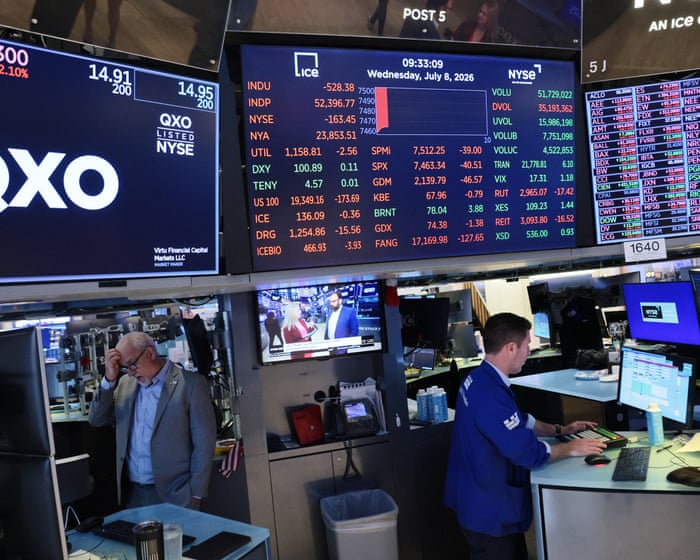
US stock markets fell on Wednesday as the US continued strikes on Iran and the Federal Reserve flagged concerns that would warrant higher interest rates.
Donald Trump’s declaration at the NATO summit in Ankara that the Iran-US ceasefire is over sent oil prices sharply higher. Brent crude jumped more than 5% to crest $80 a barrel. US stocks fell, with the Dow down 1.09% (500 points) at closing. The S&P 500 saw a small loss while the tech-heavy Nasdaq rose slightly. Global stocks had fallen earlier, with the UK’s FTSE 100 down 1% and Japan’s Nikkei down 2.1%.
At the summit, Trump criticized Iran’s leadership, calling them “sick people”, and expressed displeasure over Iran’s military alliance with Spain. He said the ceasefire is over, but US negotiators want to continue talks.
The economic impacts of the Iran war have reverberated globally. On Wednesday, the International Monetary Fund lowered its global economic growth forecast to 3%, down from 3.1% in April, citing conflict in the Middle East and pressured AI spending.
While oil prices fell sharply during the ceasefire, gas prices have remained high. US gas prices at the pump average $3.79 per gallon – $0.65 higher than a year ago. US diesel futures rose 13% on Wednesday after Russia implemented a diesel export ban following a Ukrainian drone strike that hit key refineries.
In May, the annualized US inflation rate jumped to 4.2%, a three-year high and more than double the Fed’s 2% target. Minutes from the last Fed meeting showed little discussion of lowering interest rates soon. Some officials believe the current rate of 3.5% to 3.75% can be maintained or lowered if inflation eases, but others indicated rates need to increase by year-end.
A rate hike would likely upset Trump, who has demanded the Fed lower rates despite elevated inflation. Fed Chair Kevin Warsh, who took over in May after being nominated by Trump, faces the challenge of navigating this tension.