Uganda's leading media outlets shut down by army chief
Uganda's army chief, the son of President Museveni, ordered the closure of several leading media outlets, including Daily Monitor, NTV, and Spark TV, which belong to the Nation Media Group.
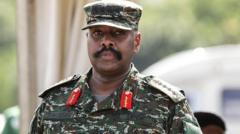
Uganda's leading independent media group, Nation Media Group, says it is under "military siege" after the army chief and son of President Yoweri Museveni, General Muhoozi Kainerugaba, ordered the shutdown of TV stations, newspapers, and radio outlets. Armed soldiers were stationed outside the Daily Monitor headquarters in Kampala, and both NTV and Spark TV were taken off air.
General Kainerugaba posted on X that he does not believe in a free press and that the press should be guided by cadres of the revolution. He also stated that his "great father" had given him the power to shut down any media house he wanted, and that NTV and Daily Monitor would not reopen without his permission. "From now on ALL media in Uganda will follow the rules!" he added.
Opposition and human rights groups accuse General Kainerugaba of being a central figure in a repressive regime led by his father. President Museveni, 81, a former rebel leader, has been in power for about 40 years. He won a record seventh term in disputed elections in January, with widespread speculation that he is grooming his son to succeed him.
The Daily Monitor noted that this is not the first such incident. The newspaper was raided by police in 2013 over the publication of a letter allegedly linking senior officials to a succession plan dubbed the 'Muhoozi Project'. NTV was forced off air in 2007 after government accusations of negative news coverage. Museveni has repeatedly criticized the Daily Monitor, calling it an "enemy and evil newspaper" for its critical journalism.
During January's fiercely contested election, General Kainerugaba caused outrage with threats to have the testicles of defeated opposition candidate Bobi Wine removed. Before the polls, opposition rallies were disrupted, with security forces at times opening fire. The United Nations said the election was held in an "environment marked by widespread repression and intimidation against the political opposition".