UN warns El Niño could create 'perfect storm' for Africa
The UN Food and Agriculture Organization and World Food Programme are appealing for over $200 million to protect 8.8 million people in 22 countries from the looming destructive El Niño weather pattern.
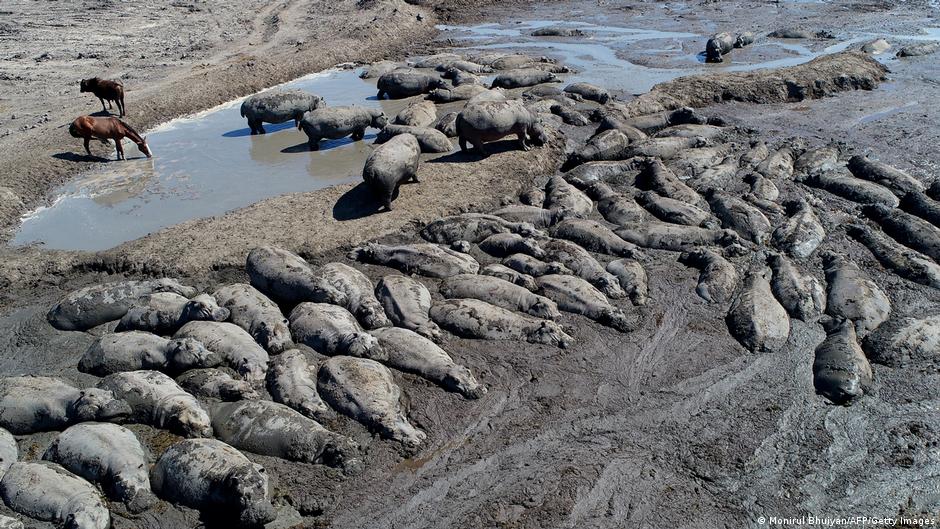
The United Nations Food and Agriculture Organization (FAO) and the World Food Programme (WFP) have appealed for more than $200 million to help protect 8.8 million people across 22 high-risk countries from the return of the destructive El Niño weather pattern. The support would include cash transfers, climate-resilient seeds, livestock protection, and flood control measures, as extreme weather already affects much of the world.
The World Meteorological Organization (WMO) has warned that El Niño conditions have developed in the tropical Pacific and are forecast to strengthen rapidly, increasing the likelihood of extreme weather events. In Africa, the most at-risk countries include Cameroon, Ethiopia, Kenya, Madagascar, Malawi, Mozambique, Nigeria, Somalia, South Sudan, Sudan, Uganda, and Zimbabwe.
El Niño is a natural warming of sea surface temperatures in the central and eastern Pacific, occurring every two to seven years and lasting 9–12 months. It can bring hotter and drier conditions in some regions and increased rainfall and flooding in others. Kgaugelo Mkumbeni, a researcher at the Institute for Security Studies in Pretoria, notes that Africa's impact will vary. Southern Africa has experienced hotter and drier conditions during past El Niños, raising risks of drought, water shortages, and food insecurity. Eastern Africa's situation is more complex, with effects depending on the season.
Bhargabi Bharadwaj, a research associate at Chatham House, explains that climate change does not directly cause El Niño but can worsen its effects. “We're working with baseline temperatures around 1.4°C higher than pre-industrial levels. This means that when an El Niño event does occur, there are more extreme outcomes,” she said. Some experts worry about a possible “super” El Niño this year, with temperature differences of about 2°C.
The real challenge is whether governments and aid agencies can act quickly enough. In northern Kenya, Abdikadir Aden Hassan, founder of Garissa Million Trees, said the danger is not only heavy rains and floods but also that they may follow months of drought. People may emerge from drought only to face flash floods, hitting livelihoods twice.
Conflicts, high energy costs, debt pressures, fertilizer disruptions, and cuts in international aid are already weakening countries' ability to respond. Bharadwaj says this makes the forecast for 2026 particularly worrying, as El Niño occurs when the global system is already fragile.
Aimee-Noel Mbiyozo, a senior researcher at the Institute for Security Studies, highlights that climate events already drive displacement. Cyclones and flooding are the biggest pushers of mass displacement in Africa, while drought forces slower migration. Cities are absorbing climate-linked migrants, even as they struggle with housing, services, and informal employment. The World Bank projects that climate change alone could drive up to 86 million internally displaced people into African cities by 2050.
Special concern focuses on the Lake Chad Basin, where disasters displace more people than conflict, and southern Africa, which has faced repeated drought and cyclone cycles. Countries like Mozambique, Malawi, Zimbabwe, and Madagascar have been repeatedly affected. Some progress has been made: Mozambique invested in early warning systems, South Africa passed a Climate Change Act, and Kenya improved coordination. However, Hassan warns that without external support, national emergency funds may be insufficient, and delays in releasing money can worsen the disaster.