Bank of England governor joins walkout from IMF meeting over Russia's participation
Bank of England governor Andrew Bailey and finance leaders from several European countries left an International Monetary Fund meeting in Bangkok when Russian finance minister Anton Siluanov began speaking in Russian. The walkout was a protest against Russia's involvement.
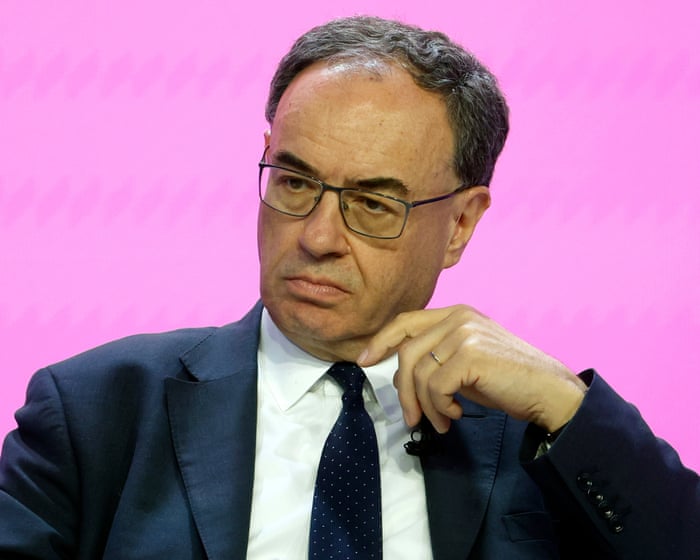
Finance leaders from several European countries staged a walkout at a meeting of the International Monetary Fund (IMF) in Bangkok, in protest against Russia's participation. Among them was Andrew Bailey, governor of the Bank of England, the UK's central bank, whose participation the bank confirmed.
Delegates left the room when Russian finance minister Anton Siluanov addressed the group in Russian. Bailey was joined by counterparts from France, Germany and a number of Scandinavian and Baltic countries. Joachim Nagel, president of Germany's central bank, the Bundesbank, said nearly half of all delegates took part in the joint departure.
A European diplomat told the Reuters news agency: "The Ukraine war is existential for us in Europe." The diplomat added that relations with Russia cannot be normalised.
Reaction from the IMF side
The walkout was acknowledged by the chair of the IMF's steering committee, Saudi finance minister Mohammed al-Jadaan. He said participants had come with a purpose and achieved it, stressing that the chair's statement shows all members agreed to it.
Germany had earlier warned against efforts to bring Russia back onto the international stage. Siluanov attended a meeting of G20 finance ministers and central bankers earlier this year. The United States supports Russia's presence: treasury undersecretary Erin Browne told Reuters that Washington backed it despite concerns from European countries.
Economic assessment
The meeting heard that the global economy was showing considerable resilience despite the war between Russia and Ukraine and problems around the strait of Hormuz caused by the US bombing campaign. Al-Jadaan nonetheless warned against complacency, pointing to public debt levels and high bond market rates.
In his statement, he said the global economy had weathered the latest in a series of shocks better than expected, but buffers had been eroded and resilience could not be taken for granted. He added that escalating conflicts and trade tensions could further disrupt critical trade routes, worsen commodity price pressures, including for refined energy products, and aggravate energy and food security.