Rijksmuseum Amsterdam stages Willem de Kooning show on his lifelong struggle between drawing and painting
An exhibition at the Rijksmuseum in Amsterdam traces abstract expressionist Willem de Kooning's lifelong rebellion against his academic training. The reviewer praises it, especially the early drawings and works from the 1950s.
Willem de Kooning is described as the last great artist schooled in the academic tradition of drawing. As a young man he was told to draw what he saw rather than what he thought, and raw personal emotion had no place in that training. The labour involved is shown by the charcoal still life Dish With Jugs, made when he was in his mid-teens. The catalogue estimates it took 600 hours at the Rotterdam academy.
The exhibition's approach
The Rijksmuseum show sets a handful of standout paintings among a wider selection of drawings. It argues that the artist rebelled all his life against rules so thoroughly internalised that he could push at their limits without fully breaking them. Early works, including a drawing of the dancer Juliet Browner and a portrait of his wife, Elaine, reveal the influence of Ingres.
De Kooning came from a working-class background. His evening classes were subsidised by the design firm where he worked by day, and after arriving in the US at 22 he made a living as a sign painter and commercial illustrator. His first solo show came when he was nearly 44.
Key works
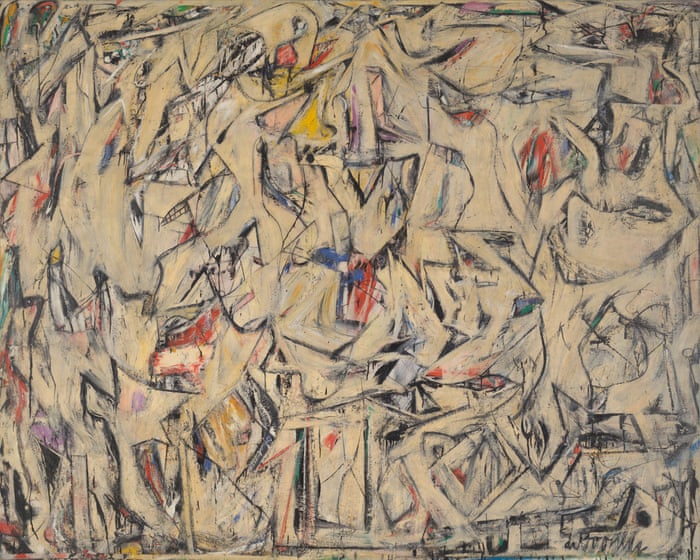
He made no distinction between drawing and painting. In Queen of Hearts, he drags charcoal across wet paint. The breakthrough came with a work on paper completed in 1949, showing white sparks against a black ground. Excavation (1950) appears as an abstract pattern before revealing a maelstrom of screaming faces and dismembered bodies. His most famous painting, Woman I, hangs in a separate gallery normally reserved for Dutch golden age treasures.
After the black-and-white works made in Rome in the late 1950s, which the reviewer finds slapdash, the show does little to challenge the view that he struggled to reach the same heights in the following two decades. Highlights include Clam Diggers and a mid-1970s painting. The drawings show that his line held even through alcoholism and a chaotic personal life.
The exhibition ends with a 1985 painting made as his cognitive decline was becoming evident: blue and black lines on a mottled white ground, serene and strikingly beautiful.