Drone Era Reshaping Warfare, Says US Defense Executive
The Gulf conflict and the war in Ukraine highlight the growing importance of mass-produced low-cost weapons, especially drones, while exposing the limits of expensive defensive systems, according to Nathan Diller, an executive at defense tech firm Mach Industries and a retired US Air Force colonel.
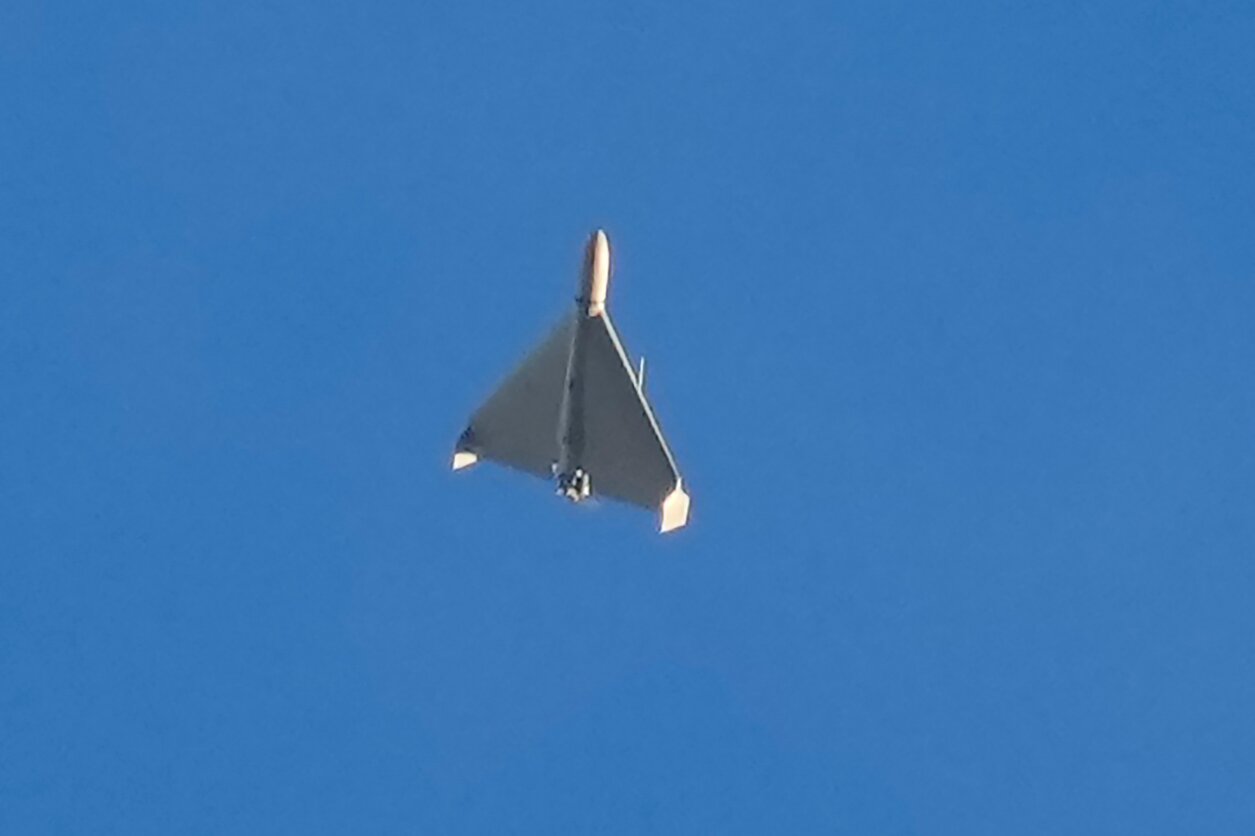
Nathan Diller, an executive at defense technology company Mach Industries and a retired US Air Force colonel, told RFE/RL in an interview that over three months of conflict in the Gulf region have underscored the rising significance of mass-produced, low-cost weapon systems, particularly drones and munitions, and revealed the limitations of relying on expensive defensive technologies to counter them.
According to Diller, the conflict reinforces the urgency for allied nations to strengthen military-industrial supply chains and build greater manufacturing resilience, drawing parallels with lessons from Russia's war in Ukraine. "When we look at low-cost drones and low-cost munitions being countered by very expensive things, this is a lesson we can't learn fast enough," he said.
Traditional Capabilities and New Technologies
Diller, a former fighter pilot, noted that traditional military capabilities remain essential, but newer technologies could have reduced the cost and duration of the Iran-Israel conflict while establishing deterrence more quickly. "It has taken two decades of ignoring this approach to warfare and this approach to mass," he said, adding that recent US government initiatives supported by Congress are helping strengthen future deterrence.
'The Factory Is the Weapon'
One of the most important lessons from the use of unmanned systems in conflicts from Ukraine to the Middle East is that manufacturing capacity itself has become a strategic asset. "What surprises me is that we have yet to realize the degree to which the factory is the weapon," Diller said. He argued that a country's ability to rapidly produce and adapt military hardware could become a decisive factor in future conflicts and deterrence strategies. "The speed of a country to create that agile factory is going to be directly proportional to our ability to deter in the future," he added.
Strategic Uncertainty
Regarding the current Gulf conflict, Diller said continued diplomatic engagement between Iran, Israel, and the US, coupled with a pause in large-scale missile exchanges, offers grounds for cautious optimism despite recent ceasefire violations. "The fact that conversations are continuing is positive," he said, adding that efforts to prevent the spread of weapons of mass destruction are helping make the world safer.
Diller also emphasized that strategic uncertainty is necessary in military deterrence, as adversaries' inability to fully predict the consequences of their actions often discourages escalation.