August 9 – World Indigenous Peoples Day highlights threatened cultures
The world marks International Day of the World's Indigenous Peoples on August 9, drawing attention to the rights of roughly 476 million people whose lands are threatened by resource extraction. A letter from an Amazon indigenous representative describes the fight against mining and logging.
International Day of the World's Indigenous Peoples is observed every year on August 9, established by the United Nations General Assembly in 1994. The day honors roughly 476 million people — about 5,000 distinct cultures and peoples across more than 90 countries — including Native Americans, Arctic Inuit, Australian Aboriginal peoples, Sami in Northern Europe and many other groups. Although indigenous peoples make up less than 5% of the world's population, they represent 15% of the world's poorest people.
Cultures at risk of disappearing
Physician and Greenpeace member Pēteris Apinis writes that many indigenous languages and traditions are disappearing under pressure from assimilation and globalization. He cites Russia as an example, where children of small indigenous peoples are taught only in Russian at school and cut off from their own language and traditions. Apinis also recalls his own experience in Siberia, where he witnessed the dying Khanty, Nenets and Yamal peoples being assimilated and relocated.
The threat of extractivism
The article argues that the greatest modern threat to indigenous peoples is the extractive resource industry, or "extractivism" — an economic model that turns nature into a commodity on an industrial scale, while local communities bear the ecological and social costs. Rising demand for critical minerals driven by the energy transition and the technology sector is opening new mines and endangering indigenous lands. Greenpeace has created a map marking territories where mining poses unacceptable risks.
Key demands include legal recognition of land ownership rights, self-determination, the right to free and prior informed consent, and an end to violence against indigenous environmental defenders.
A letter from the Amazon
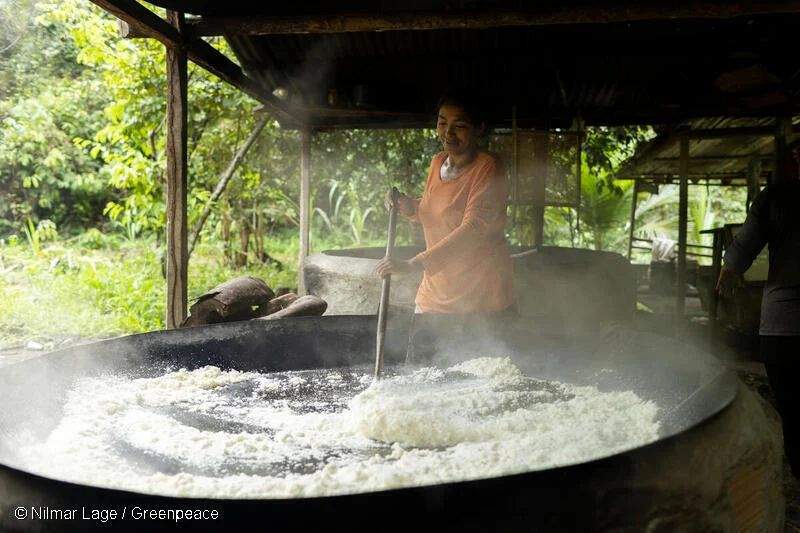
The article includes a letter from Pha'avi Deni, leader of the Deni people's association ASPODEX, describing how his community in the Amazon rainforest is fighting mining and logging that threaten their livelihoods and ancestral lands. Communities in the Médio Juruá region use joint management plans, combining fish stock restoration with rubber and manioc flour production alongside forest conservation, showing that economic well-being can coexist with preserving the forest.