Hungary 1956: A Historian on the Roots of the Uprising Against Soviet-Backed Rule
Seventy years ago, mass protests in Budapest grew into an armed uprising that the Soviet army crushed on November 4. Meduza has published historian Alexey Uvarov's explanation of the background to the events.
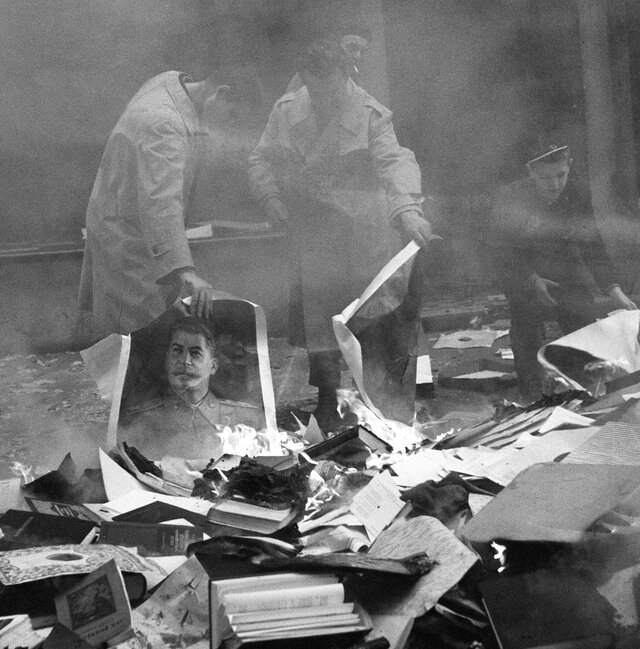
On October 23, 1956, hundreds of thousands of residents of Budapest, Hungary's capital, took to the streets demanding political reforms, free elections, and the withdrawal of Soviet troops. The peaceful demonstrations soon turned into an armed uprising. The Soviet leadership at first agreed to concessions and to pulling troops out of the city, but then changed course. On November 4, the Soviet army launched a large-scale military operation and crushed the revolt. Thousands of people died, and about 200,000 Hungarians left the country. Western governments condemned Moscow's actions but did not intervene. Seventy years on, the independent Russian outlet Meduza has published historian Alexey Uvarov's answers to questions about the uprising.
The international setting
In autumn 1956 the Cold War was almost a decade old. After Stalin died in 1953, tensions eased: the Korean War ended, in 1955 the Soviet Union withdrew its troops from Austria, which became neutral, and leaders of the four major powers met in Geneva. In February 1956, at the 20th Congress of the Soviet Communist Party, Nikita Khrushchev delivered a secret speech condemning Stalin's cult of personality and mass repression, prompting debate on reform across Eastern Europe. The administration of US President Dwight Eisenhower spoke publicly of "liberating" Eastern Europe but acted cautiously in practice, fearing nuclear war. The Suez Crisis, which divided Western powers, broke out at the same time.
Hungary's road to 1956
Until 1918 Hungary was part of Austria-Hungary. Between the wars it was led by Regent Miklós Horthy, and in World War II it fought on Germany's side. The Red Army took Budapest in February 1945. After the 1945 elections, in which the communists won about 17% of the vote, Mátyás Rákosi used pressure and repression to establish complete communist control by the late 1940s. The country was remade on the Soviet model, industry was nationalized, and living standards fell.
After Stalin's death, Moscow demanded that Rákosi hand the premiership to Imre Nagy, who launched a "new course." Nagy was removed in 1955, but demands for change kept growing. On October 6, 1956, tens of thousands attended the reburial of the executed László Rajk, turning it into a mass demonstration against the regime.